
Economic activity of the population - 2. quarter of 2006
Product Code: e-3133-06
Economic activity of the population in Q2 2006
Employment in the primary sector (agriculture, forestry, fishing) decreased by 9.5 thousand to 185.5 thousand persons year-on-year and made up only 3.8% of the total number of first (main) job holders. The number of persons employed in the secondary sector (industry, construction) increased compared to Q2 2005 by 56.1 thousand to 1 929.8 thousand (40.0% of total employment). This growth was mainly affected by the year-on-year increase of 75.8 thousand in employment that occurred in ‘manufacturing’. The number of employed persons went up most in ‘manufacture of parts and accessories for motor vehicles and their engines’ (+20.8 thousand), ‘treatment and coating of metals; general mechanical engineering’ (+18.6 thousand),’manufacture of basic iron and steel and ferro-alloys’ (+9.1 thousand), ‘manufacture of other general purpose machinery’ (+7.8 thousand). Decrease in the number of employed in ‘construction’ by 27.1 thousand was due to unfavourable climatic conditions in spring months.
Employment in the tertiary sector (all divisions of services including transport) increased by 29.1 thousand to 2 709.6 thousand (56.2% of total employment), but it developed in the individual divisions in an opposing way. Employment increased most in ‘real estate; renting and business activities’ (+38.0 thousand) ‘hotels and restaurants’ (+4.3 thousand), and ‘transport, storage and communication’ (+3.2 thousand). Within the section ‘real estate; renting and business activities’ the growth showed mostly in ‘investigation and security activities’, within the section ‘other computer related activities’, in ‘advertising, legal, accounting and book-keeping activities’, ‘tax consultancy, market research and public opinion polling’. In hotels and restaurants it grew most in ‘restaurants’ and within the section ‘transport’, particularly the number of persons employed in ‘other land transport’ increased.
On the other hand, employment dropped most year-on-year in ‘education’ (-8.2 thousand), mainly in ‘primary education’. Employment dropped also in ‘public administration and defence; compulsory social security’ (-7.0 thousand), most in ‘administration of the State and the economic and social policy of the community’.
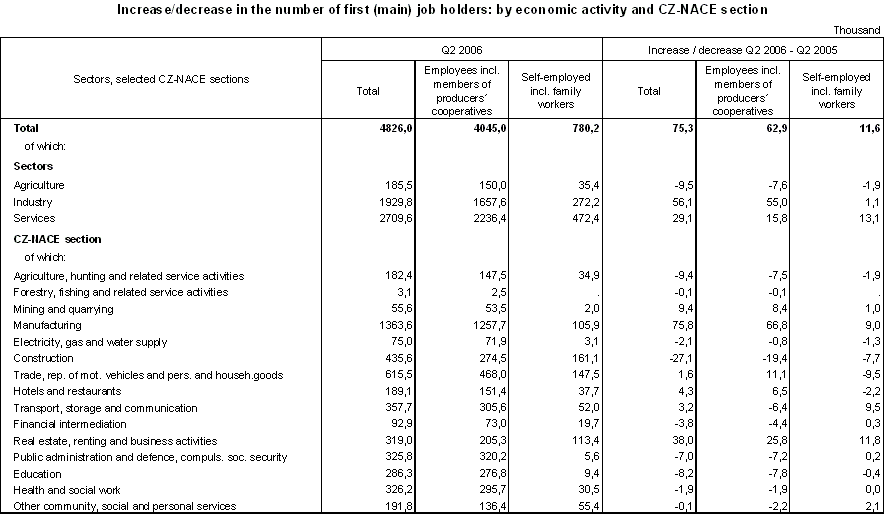
An increase in the total number of self-employed by 11.6 thousand showed itself mainly in the section ‘real estate; renting and business activities’. Year-on-year increase in the number of self-employed persons, including contributing family workers was the highest in ‘architectural and engineering activities and related technical consultancy’ (+4.5 thousand) and within the section ‘other computer related activities’. In ‘manufacturing’ the number of self-employed increased in ‘manufacture of furniture’ and in ‘transport, storage and communication’ in the section land transport.
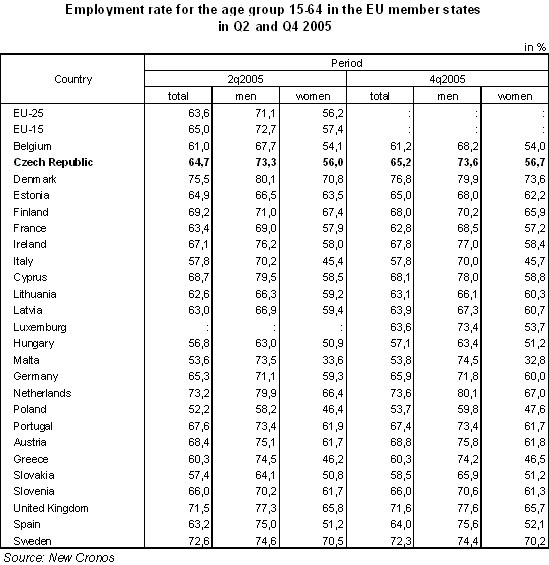
The total employment rate of persons aged 15-64 grew year-on-year by 0.6 percentage points to 65.3%. The relative increase was higher in the employment of women at working age (+0.8 percentage points to 56.9%), while employment of men was 0.3 percentage points up and reached 73.6%. The employment rate is pushed down by a fast growth of the number of students at universities on the one hand, and, on the other hand, the number of persons in employment is increasing due to the involvement of strong age groups born at the turn of the forties and fifties and in the middle of seventies.
Compared internationally, the Czech Republic is among the countries with the above-the-average employment intensity in the EU. According to the latest complete data for Q2 2005 released by Eurostat, the employment rate of persons aged 15-64 in the Czech Republic was higher than the total for EU25 and not far from the level in the EU15 (however, we should take account of the fast growth of this indicator in the CR during the whole of the last year). Nevertheless, differences in employment rates are considerable, not only if we compare the whole age group 15-64, but also in the male and female components of employment. On the one hand, there is a high level of employment in the northern countries and the United Kingdom (e.g. in Denmark it was 76.8% in Q4 2005), on the other hand in many countries the level of employment was lower than 60% (in Poland it reached only 53.7%). Compared to our neighbour states, higher level of employment is in Austria and slightly higher also in Germany, level of employment in Poland and also in Slovakia is, however, significantly lower. In the following table, there are apart from data for Q2 also data for Q4 2005 (a qualified estimate was made for some of the countries for Q4 2005).
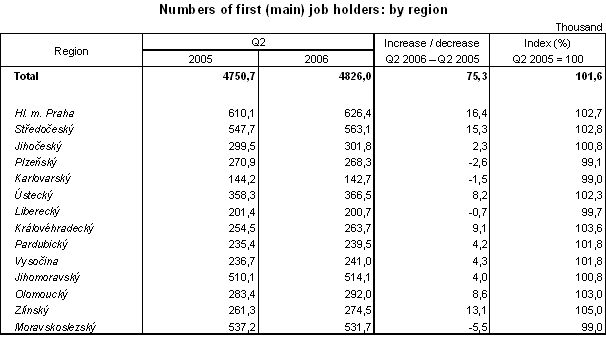
The employment of persons living in the individual regions of the Czech Republic dropped year-on-year only in four of them, most in the Moravskoslezský Region. The number of employed persons increased particularly in the Hl. m. Praha and Středočeský Region.
There were almost 95% of persons working full time in their main job in the civil sector of the national economy, which is significantly more than in the other EU states. Nearly 245 thousand persons worked part-time in their main job, most of them were women (182 thousand).
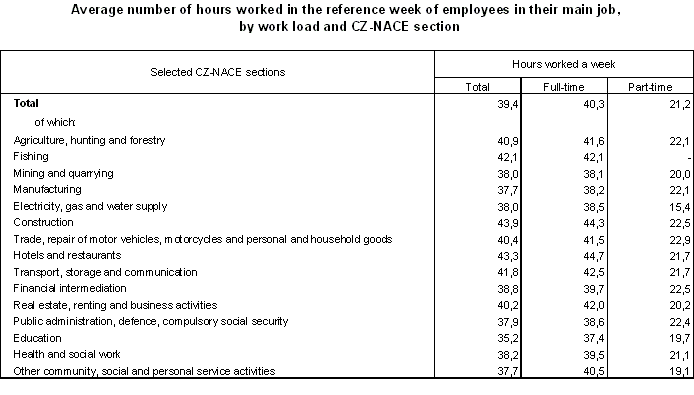
The number of hours actually worked in the reference week reached 39.4 hours, in full-time employment it was 40.3 hours. The differences in working hours of employees are large, both in terms of their professional status and industry (CZ-NACE sections). The self-employed worked approximately 48.9 hours a week, contributing family workers 44.5 hours and with a huge gap the category of full-time employees followed with approximately 38.7 hours worked. In the long term, these differences are apparent both for men and women when generally men work longer in all of the status categories. The most hours worked in their main job had employees in construction (43.9 hours) and in hotels and restaurants (43.3 hours), the least had employees in education (35.2 hours).
With the growing total employment of the residing population, the number of the economically inactive and the number of the unemployed decreased. The number of unemployed persons (ILO methodology) reached 366.7 thousand on average in Q2 2006, i.e. a fall of 35.4 thousand year-on-year. The number of the unemployed decreased mainly in the age group 25-29 by 20.2 thousand; it also dropped in the age group 35-54 (-17.3 thousand). The number of unemployed men (165.4 thousand in total) is still below the number of unemployed women (201.3 thousand). Under the total year-on-year drop in unemployment, the unemployment of men decreased by 14.8 thousand, and the decrease showed itself in the whole group of young and middle productive age up to the age of 54, except 30-34-year-old persons. Over the same period, the number of unemployed women decreased by 20.6 thousand in total, the biggest decrease occurred in the age group 25-29 (-14.9 thousand). Unemployment of men and women in the pre retirement and retirement age of 55-64 grew slightly (in total +2.3 thousand).
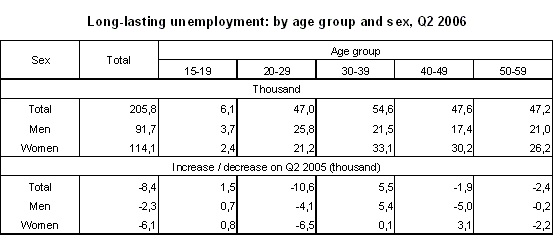
The number of persons unemployed for a long time (1 year or more) fell by 8.4 thousand. In spite of this total drop, a high increase was recorded among men aged 30-39 (+5.3 thousand) and women aged 40-49 (+3.1 thousand), which is connected to a certain extent with a natural shift in the age structure of the population.
The number of the unemployed with basic education decreased by 7.3% year-on-year to 92.8 thousand, which is connected with a general decrease of the number of persons in the productive age with the lowest level of education. The number of unemployed persons with secondary education without GCSE (with secondary vocational education in particular) decreased by 14.1% to 164.5 thousand and the number of the unemployed with secondary (with GCSE) decreased by 4.2% to 91.2 thousand. The number of unemployed university graduates rose by 18.3% to 18.1 thousand, however the unemployment of university graduates is markedly lower when compared to the first three groups.
Year-on-year, the unemployment dropped particularly in the Moravskoslezský Region , the Hl. m. Praha and the Zlínský Region. Compared to Q2 of the last year, the number of unemployed slightly increased in five regions, however this increase is lower than the statistical discrepancy.
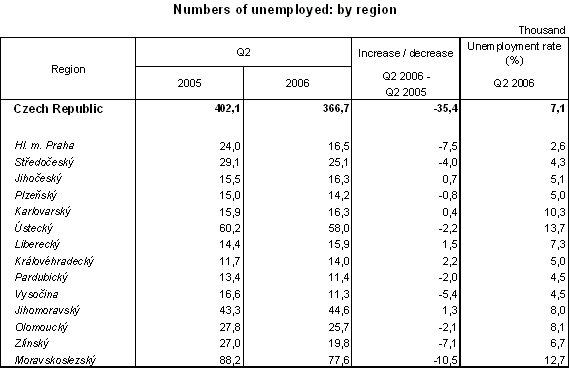
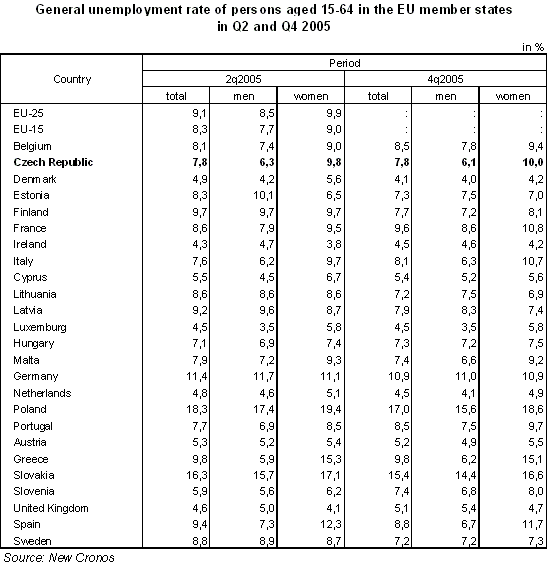
The growth of total employment and the decrease in the number of the unemployed resulted in a relatively high decrease of general unemployment rate of persons aged 15-64 (ILO). In comparison to Q2 2005, the general unemployment rate decreased by 0.7percentage points to 7.1%. It decreased mainly among the female population (by 1.0 percentage points to 8.8%), while it dropped among the men population by 0.6 percentage points to 5.7%. According to the latest complete results of the Eurostat for Q2 2005 the general unemployment rate in the Czech Republic was lower than in the EU25, when with a relatively low unemployment level of men the level of unemployment of women in the CR was practically the same as the total for all EU member states. The big decrease of unemployment during this year in the Czech Republic had a positive effect in both of the comparisons with the EU25 and EU15 countries.
Compared to the neighbour states, the level of unemployment is higher than in Austria but markedly lower than in Poland and Slovakia, where it is still extremely high and the highest throughout the Union. Our unemployment level is lower also in comparison with Germany mainly due to an unfavourable situation in the long run in the federal states in the regions of former DDR.
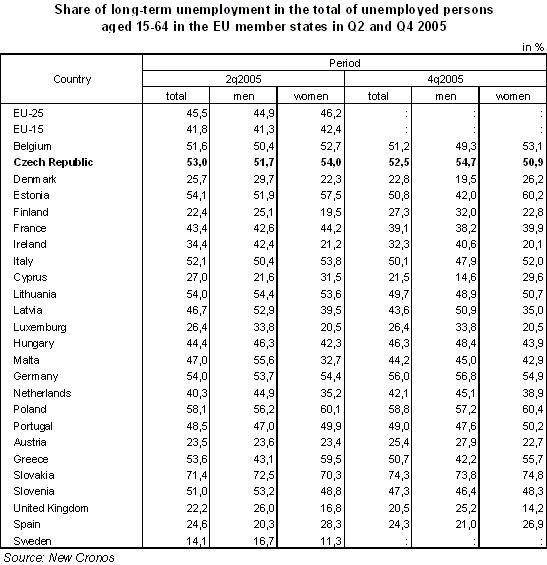
Unlike the total unemployment level, the position of the Czech Republic is less favourable from the point of view of long-term unemployment (1 year and more). In Q4 2005, the share of long-term unemployed in the total unemployment was higher only in three countries, which are our direct neighbours – Germany, Poland, Slovakia. The share of long-term unemployment in the total unemployment increased in the long run in the countries with the biggest share of long-term unemployed, i.e. in Poland and Slovakia. This applies both for men and women. Completely different is the situation in Austria, where only one out of four unemployed was unemployed more than one year.
The number of economically inactive persons aged 15+ (according to the LFSS methodology they are persons who had no job and were not seeking a job during last four weeks or did not meet all conditions for being classified among the unemployed) increased by 20.3 thousand year-on-year and reached 3 572.6 thousand in Q2 2006. This category is primarily affected by numbers of the retired and of persons preparing for their future occupation. The number of basic school pupils increased by 8.7 thousand; the number of secondary school pupils including vocational schools increased by 3.2 thousand to 519.0 thousand. The number of university students including higher professional school students grew by 5.3 thousand to 254.7 thousand. The number of economically inactive normally retired persons not actively seeking job decreased by 1.0 thousand to 1 820.1 thousand and the number of persons in early retirement fell by 10.2 thousand to 61.4 thousand. Furthermore, the number of disability pensioners decreased by 36.0 thousand to 272.9 thousand. These figures cannot accurately correspond to the statistics on pupils and students compiled by the Ministry of Education. Youth and Sports of the CR or to the numbers of pensioners on the records of the Ministry of Labour and Social Affairs of the CR because the pupils, students or pensioners who fulfilled the criterion of being classified among persons in employment or unemployed persons in the reference week are not reported as economically inactive.