Analysis of the housing construction in the Czech Republic - in 2007
Publication Date: 13. 05. 2008
Product Code: e-8215-08
1. Summary
Starting and completing of dwellings
- in 2007, 41 649 dwellings were completed (up by 38.0%);
- 43 796 dwellings were started, i.e. the most since 1993;
- higher number of dwellings started than that of completed resulted in an increase of dwellings under construction – 170 972 dwellings were under construction at the end of 2007.
Acquisition value
- the acquisition value of residential buildings completed in 2007 reached CZK 86.6billion;
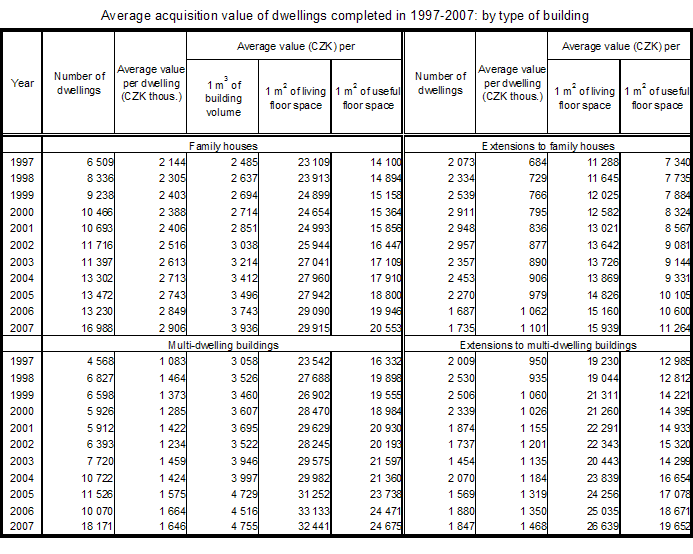
- acquisition value per dwelling was CZK 2 099 thousand (up by 1.4% year-on-year);
- acquisition value per m2 of living floor space was CZK 29.8 thousand (up by 3.3%).
Amenities
- electricity and water supply coverage is considered 100% and is not observed;
- over 84% of dwellings completed in 2007 were connected to a central heating system (local or long-distance heating);
- more than half of the new family houses were connected to the sewerage system (67.9%).
Length of construction period
- the average construction period of a residential building decreased by 2.7% year-on-year and took 39.8 months;
- compared to multi-dwelling buildings, construction period for family houses and extensions thereto was markedly longer; approx. 15% of family houses were being built more than 5 years.
Dwelling size
- average living floor space per dwelling decreased by 1.9% on 2006 and reached 70.4 m2;
- average useful floor space per dwelling was 98.7 m2 (down by 3.3%);
- the size of useful floor space of dwellings in family houses was more than double of that in multi-dwelling buildings; living floor space of dwellings in family houses is nearly twice as large as living floor space of dwellings in multi-dwelling buildings.
Number of rooms per dwelling
- bed-sitters made up 7.0% of the total number of dwellings; dwellings with a kitchen plus one room 10.0%, two rooms 22.0%, three rooms 22.7%, four rooms 19.9%, and five or more rooms 18.3%;
- dwellings 5+1 (five rooms plus a kitchen) were prevailing in family houses;
- dwellings 2+1 (two rooms plus a kitchen) were prevailing in multi-dwelling buildings.
Construction material of load-bearing walls
- masonry prevailed (family houses 92%, multi-dwelling buildings 72.8%);
- prefabricated constructions decreased (in particular for multi-dwelling buildings – from 22.5% in 1997 to 4.2% in 2007);
- low percentage of wood constructions continued (approx. 3.9%).
Building sites for family houses
- the average size of a building site kept on growing (from 887.6 m2 in 1997 to 1 073 m2 in 2007);
- the average built-up area was 134.0 m2.
Territorial allocation of dwellings
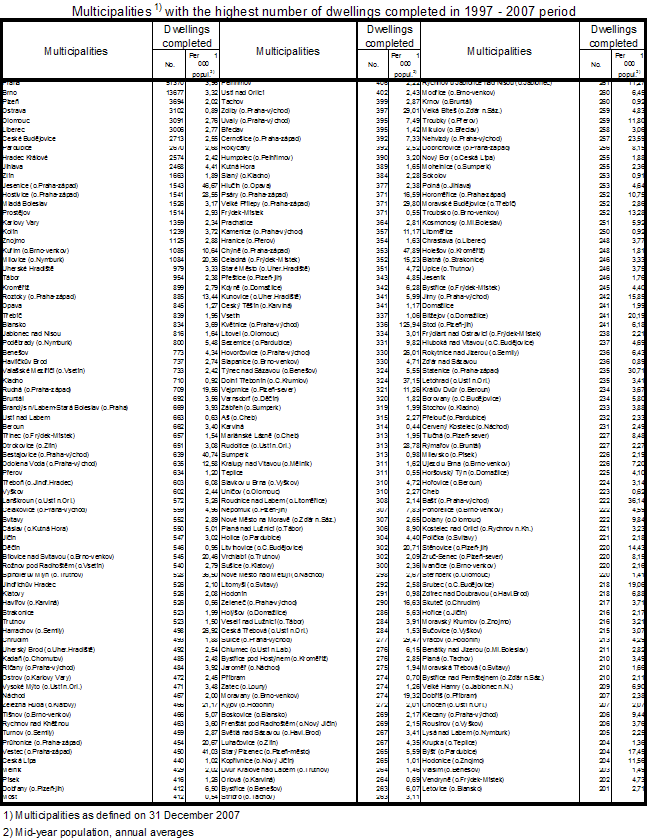
- the process of sub-urbanisation continued, i.e. the trend of residential units being built in the neighbourhood of large towns (Prague, Brno, Plzeň, Ostrava, Olomouc, Liberec);
- intensive construction of dwellings in winter holiday centres continued (e.g., Harrachov, Špindlerův Mlýn, Železná Ruda).
2. Numbers and the structure dwellings
In 2007 41 649 dwellings were completed, which was up by 38.0% year-on-year. Increases in dwellings completed were recorded in all categories of housing construction except for dwellings in new community care service homes and boarding houses (down by 30.3%) and new dwellings obtained by conversion of non-residential spaces (down by 18.6%).
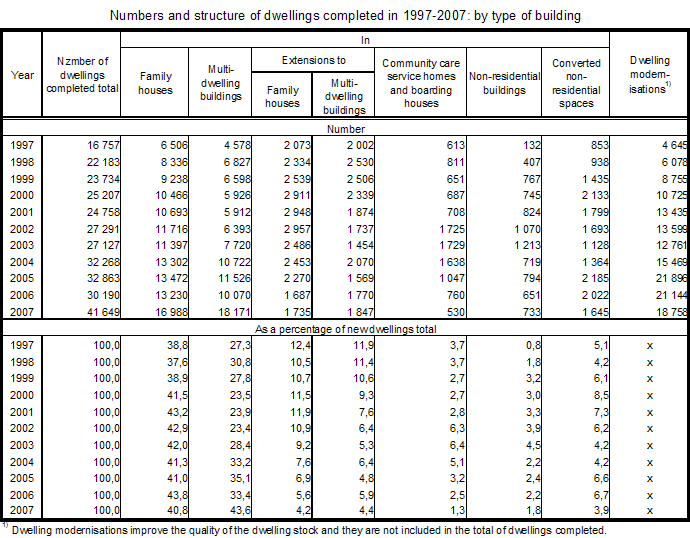
In 2007 the percentage of dwellings completed in multi-dwelling buildings increased and that of dwellings in family houses dropped. The percentages of the other categories of dwellings completed were lower.
In 2007 43 796 dwellings were started, which was the most since 1993.
In 2007 15 283 dwellings started in new multi-dwelling buildings made up 34.9% of the total of all dwellings started. The percentage of started new family houses exceeded 40% over last years. In 2007 it reached 47.9%, which was up by 0.8 percentage points on 2006. The percentage of dwellings started as extensions to family houses had a decreasing tendency in last years, being as low as 5.3% in 2007. The number of dwellings started as extensions to multi-dwelling buildings slightly dropped again against 2006 and its percentage was 4.2%. Decreasing shares in dwellings started was observed also in all the remaining types of buildings.
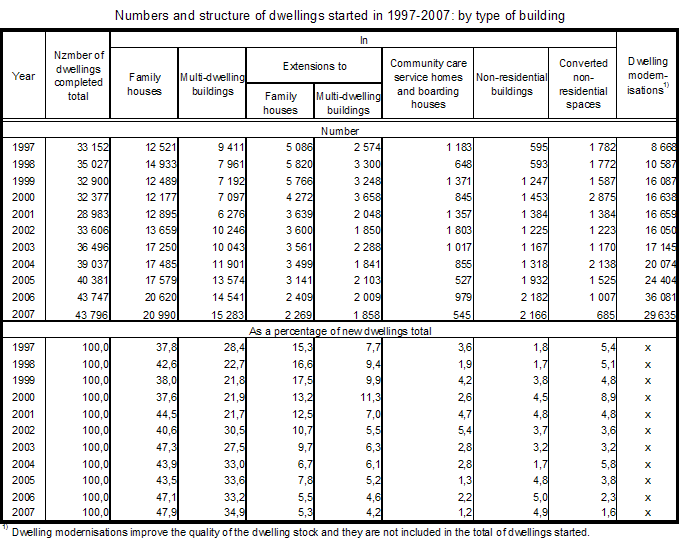
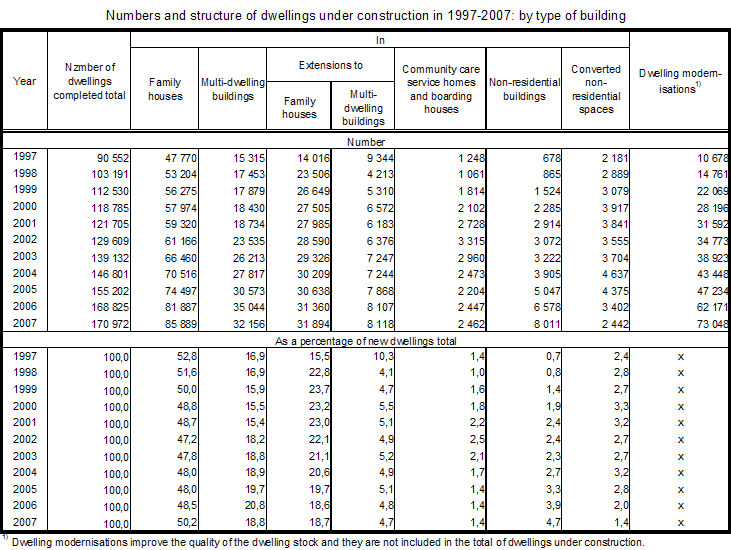
Dwellings under construction are the only section of housing construction that has been steadily increasing since it reached the minimum in 1994. At the end of 2007 there were 170 972 dwellings under construction in the Czech Republic, including those whose construction was suspended.
Out of the total number of 170 972 dwellings under construction at the end of 2007, dwellings in new family houses had the highest percentage (50.2%), followed by dwellings in extensions to family houses (18.7%). Due to a considerably shorter construction period of multi-dwelling buildings the percentage of dwellings under construction in them was substantially lower, namely 18.8% in new multi-dwelling buildings and 4.7% in extensions to multi-dwelling buildings. The remaining percentage of dwellings under construction fell on other types of buildings in which new dwellings were being constructed.
3. Dwelling types
The size of living and useful floor space of dwellings varied during the years depending on the structure of completed buildings. In 2007 the average living floor space per dwelling was 70.4 m 2 and the average useful floor space 98.7 m 2.
In construction of family houses, living floor space per dwelling was nearly double that in multi-dwelling buildings (97.1 m 2 and 50.7 m 2 respectively). The smallest dwellings are built in community care service homes and boarding houses (30.8 m 2).
Dwellings in family houses and multi-dwelling buildings: by number of rooms, 2007
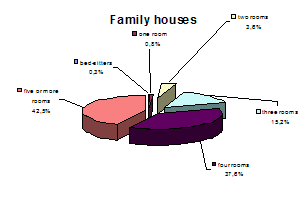 | 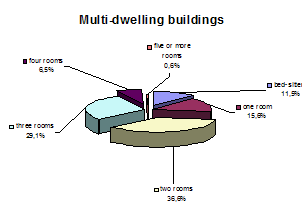 |
Size of dwellings completed differs depending on the type of a building. Prevailing size in family houses are dwellings 5+1 (five rooms plus a kitchen), while in multi-dwelling buildings two-room dwellings. The number of rooms per dwelling slightly increases.
Amenities of dwellings are better year by year. Electricity and water supply coverage is considered 100% and is not observed. In all types of housing construction the percentage of dwellings connected to the gas service decreased, except for extensions to family houses where it remained constant year-on-year. In 2007 33.6% of dwellings were completed unconnected to the gas service. More than half of new family houses were connected to the sewerage system (67.9%); 9.9% of family houses had a wastewater treatment plant of their own. In a large majority of family houses central heating was put in (90.9% local heating, 0.3% long-distance heating). Among multi-dwelling buildings 42.5% had local central heating and 43.2% long-distance central heating.
As for the use of construction materials, masonry prevailed – 91.6% of dwellings were built of bricks and blocks. The percentage for family houses was 92.0% and for multi-dwelling buildings 72.8%. Prefabricated constructions dropped considerably, in particular of multi-dwelling buildings (from 22.5% in 1997 to 4.2%). The low percentage of wood constructions continued, being 4.6% for family houses and a mere 0.9% for multi-dwelling buildings. Other building materials were used for 3.0% of buildings, especially of family houses.
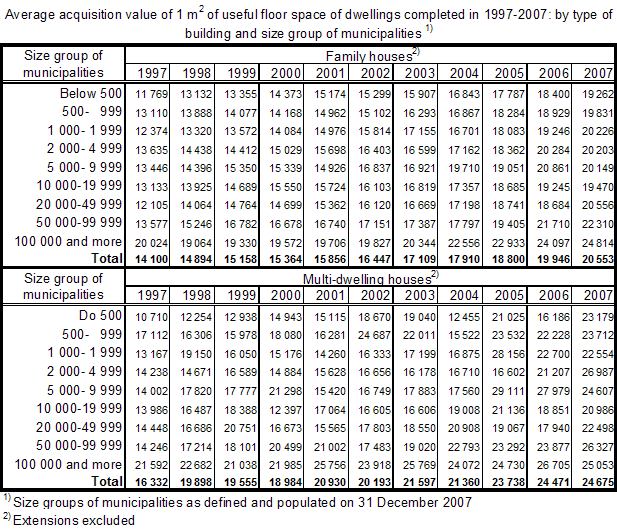
The size of building sites for family houses constantly grew over the years. The average size of a building site increased from 887.6 m 2 in 1997 to 1 073 m 2 in 2007. Larger building sites are in small municipalities with population below 5 000 (average size up to 1 200 m2). The size of built-up area stagnates evenly across the size groups of municipalities and regions. The average built-up area per family house is around 130–140 m 2; in 2007 it was 134.0 m 2.
Construction period was still very long, although it has been slightly decreasing in last years. In 2007 the construction of a family house took 39 months on average. Nearly 14.8% of family houses are being built over 5 years. Multi-dwelling buildings were completed by more than 6 months faster in comparison to family houses (29 months). Dwellings in extensions to family houses take the longest construction time (over 4.5 years) .
4. Housing construction by region and municipality
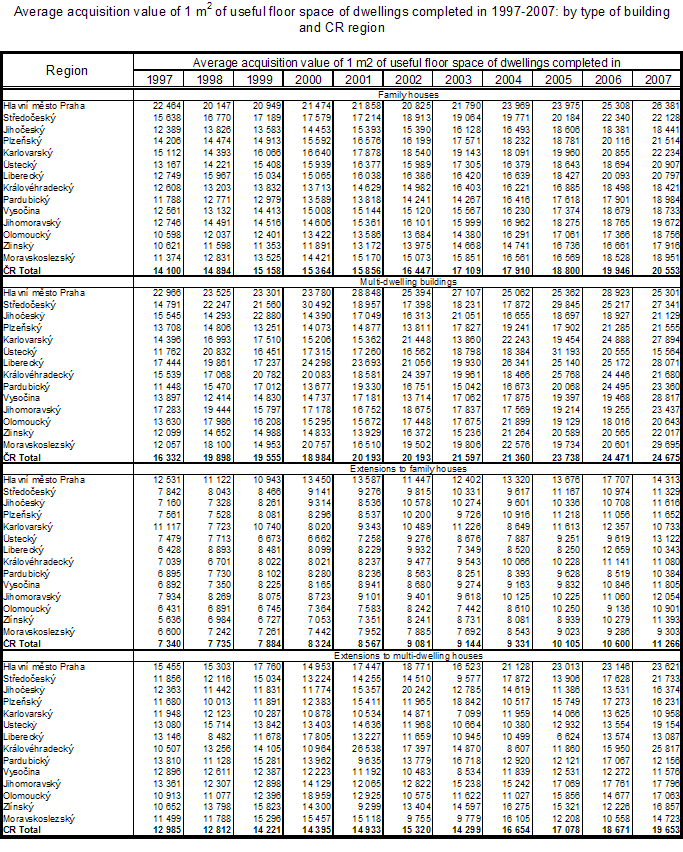
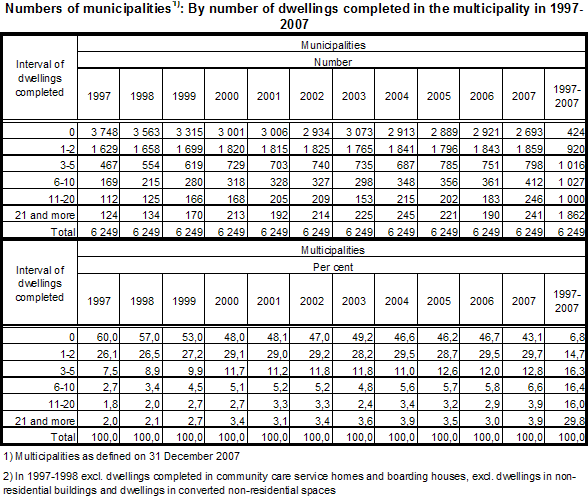
In 2007 most dwellings were built in Prague and its neighbourhoods, in the Středočeský and Jihomoravský regions, fewest in the Karlovarský, Ústecký and Liberecký regions. In Prague and Jihomoravský regions the most dwellings were built in multi-dwelling buildings, in the other regions dwellings in family houses prevailed (especially in the Středočeský, Jihočeský and Moravskoslezský regions).
5. Acquisition value of dwellings
The most important characteristics of quality of completed dwellings are the acquisition value, which is given for the whole construction. This concept refers to total estimated investment costs of construction (minimum is the amount given in the building application documents – approximate costs of construction including technology). The total acquisition value does not include price of the building site. In 2007 the total acquisition value of all dwellings completed in the Czech Republic reached approx. CZK 86.6 billion.
In 2007 continued the tendency of rising costs of construction of new residential buildings continued. An exception are new dwellings in multi-dwelling houses where in 2007 acquisition value per dwelling was CZK 1 646 thousand, i.e. by CZK 18 thousand lower in comparison to 2006.
Since the information on average acquisition value per dwelling does not show the differences in three- and two-dimensional size of dwellings and houses, it is convenient for the evaluation of construction price development to recalculate the overall acquisition value to a square or cubic unit of a new dwelling. The acquisition value per 1 m 3 of building volume, which is an important economic indicator for building owners, has been growing since 1997 even faster than the average costs of acquisition of a dwelling. In 2007 1 m 3 cost CZK 3 936 in family houses and CZK 4 755 in multi-dwelling buildings, which was slightly more for both. On the other hand, a decrease was registered for 1 m 2 of living floor space in multi-dwelling buildings where the average price was CZK 32 441, i.e. down by 2.1% on 2006.