Sales in retail trade - 4. quarter of 2006
Publication Date: 15. 02. 2007
Product Code: e-9109-06
Sales in retail trade
4th quarter 2006
In Q4 2006, seasonally adjusted retail sales including the automotive segment grew by 1.3% quarter-on-quarter at constant prices, in the automotive segment by 0.3% and in retail trade by 1.7%. Year-on-year, sales increased by 7.0% in total, in the automotive segment by 7.3% and in retail trade by 6.8%.
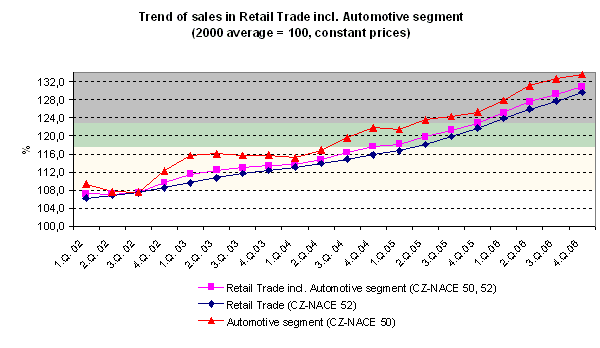
Working time availability was in Q4 2006 the same as in Q4 2005. Not seasonally adjusted sales in retail trade including the automotive segment increased by 6.5% year-on-year at constant prices. In retail trade sales rose by 6.1%, compared to the last two quarters the growth slightly accelerated.
Table 1 Sales indices in Retail Trade incl. Automotive segment
(Corresponding period of previous year = 100, at constant prices, not seas. adjusted)
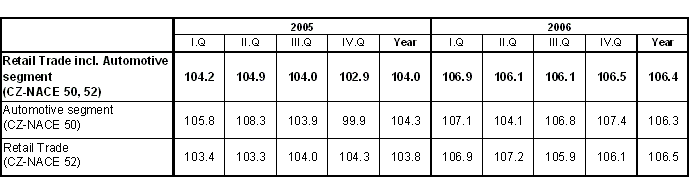
In Q4 2006, the year-on-year sales in the automotive segment grew by 7.4%, compared to the average since the beginning of the year sales grew faster by 1.1 percentage points. The development was mainly influenced by the sale of automotive fuel, which recorded an increase of the growth rate by 3.5 percentage points at constant prices (+7.0% year-on-year) compared to the previous quarter. S ales and repair of automotive vehicles increased by 7.7% year-on-year and exceeded the yearly average level by 0.6 percentage points.
According to the Automotive Industry Association statistics, the number of first registrations of vehicles increased markedly (+27.2%) in Q4 2006, of which the number of new vehicles increased by 5.7% and used vehicles by 54.7%. First registrations grew in all of the vehicle categories.
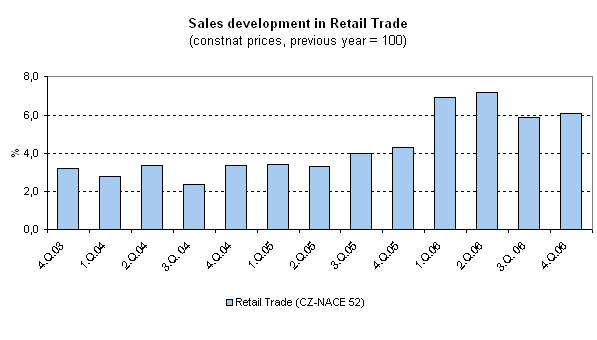
During Q4 2006, the growth rate in retail sales gradually decelerated (from 7.9% in October to 4.7% in December), which was connected with a lower number of working days mainly in December 2006 compared to December 2005 (2 working days less). After seasonal adjustments sales, however, increased by 7.5%.
During Q4, growth occurred in all of the observed size groups, the highest was in enterprises with 50 to 99 employees, the lowest in enterprises with 0 to 49 employees. A contribution of almost a third to the total growth had mostly non-specialised stores with food, beverages or tobacco predominating, stores with non-food goods predominating had only 6.0%. Specialised stores with non-food goods increased their sales by 7.6%, the highest growth was reached in stores with clothing, textiles and footwear (+16.2%), a decrease, on the other hand, was recorded in sale of pharmaceutical and medical goods, cosmetic and toilet articles (-2.5%). Similarly as in the previous six quarters, sales of non-food goods grew faster than sales of food, beverages or tobacco.
Table 2 Not seasonally adjusted sales at constant prices in individual assortment types of stores, Q4 2006
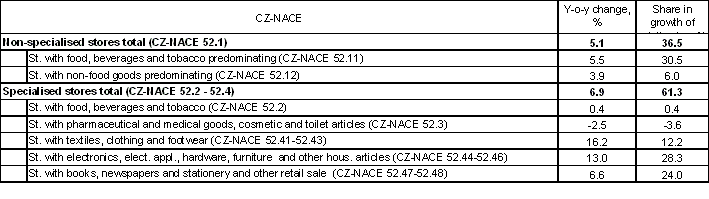
The sales of food, beverages and tobacco in Q4 2006 increased by 4.7%, which roughly equals to the average growth since the beginning of the year. The highest growth was reached in December, the lowest in October. Sales increased in both non-specialised stores (+5.5%) and in specialised stores (+0.4%). Broken down by size group of enterprises, in the food sector sales increased only in enterprises with 100 and more employees (6.9%), sales in enterprises with 50 to 99 employees stagnated and enterprises with 0 to 19 and 20 to 49 employees recorded a drop.
Sales of non-food goods increased by 7.0%. The biggest contribution to the given development had stores with furniture, electrical household appliances and hardware and stores with other non-food goods. The fastest growth occurred in sale of textiles, clothes and footwear and the highest growth was recorded in enterprises with 100 and more employees.

* * *
Year 2006
The year 2006 was in trade characterised by organizational changes of big enterprises conducting business in the CR. The process of market formation, which was started by the withdrawal of JULIUS MEINL in 2005, continued by for e.g. the takeover of companies EDECA and CARREFOUR by TESCO. In the end of the year, DELVITA also announced its withdrawal from the market; its stores will be taken over by REWE GROUP, which runs PENNY MARKET and BILLA supermarkets. The mentioned withdrawals of the important enterprises were not a reaction to the drop of sales, on the contrary the year 2006 was for retail trade a record-breaking year, sales increased the most in the last ten years, by 6.5%.
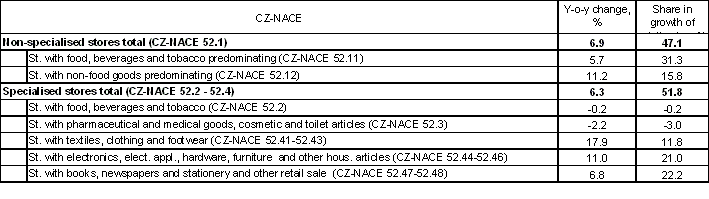
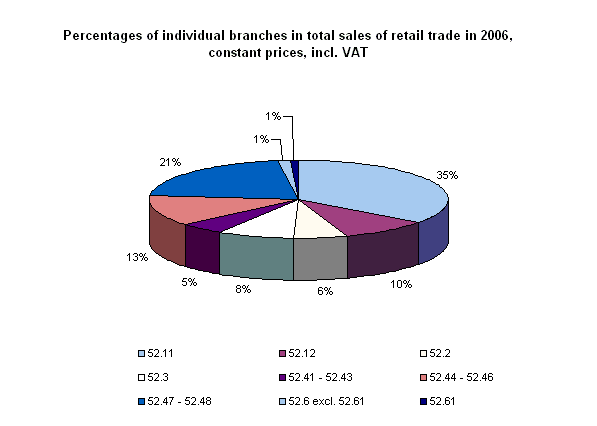
In retail trade sales increased year-on-year in all of the quarters, the most in Q2 and the least in Q3. The biggest share in the sale growth (31.3%) had non-specialised stores with food, beverages or tobacco predominating with the growth of 5.7%. Non-specialised stores with non-food goods predominating had a sale growth of 11.2% and their contribution to the total growth represented 15.8%. A drop of sales was recorded only in stores with pharmaceutical and medical goods, cosmetic and toilet articles (-2.2%) and specialised stores with food, beverages or tobacco (-0.2%). From the size group of enterprises point of view, the year 2006 was successful for all structures, the most for enterprises with 100+ employees (+9.8%). Enterprises with 0 to 19 and 20 to 49 employees recorded a sale growth of 3.0%. (A more detailed evaluation is given in the News Releases – Retail Trade – December 2006).
Table 3 Not seasonally adjusted sales at constant prices in individual assortment types of stores, 2006