
Development of external trade price indices - 4. quarter of 2005 and year 2005
Product Code: e-7232-05
Development of external trade price indices in the fourth quarter of 2005 and 2005
Development of external trade price indices in the fourth quarter of 2005
Month-on-month evaluation:
Import prices were increasing in average in the fourth quarter of 2005 by 0.1% month-on-month (in the Q3 they did not change m-o-m). Export prices, on the contrary, were decreasing in average by 0.2% m-o-m in the fourth quarter (-0.4% in Q3). The development of import and export prices was similar in the Q4: they grew in October and dropped in November and December.
During the fourth quarter, the biggest m-o-m changes in external trade prices occurred in 'mineral fuels, lubricants and related materials'. That development was fully in accord with the price development on world markets: correlation of m-o-m indices of Brent petroleum prices on world markets and of the division of petroleum, petroleum products and related materials reached in 2005 at imports the value of 0.68 and at exports it was 0.49. Thus, the correlation was rather strong even in the situation, in which the relation of prices of petroleum and petroleum products (significant share in this division especially as for exports) is quite loose and, moreover, in the situation when Brent petroleum prices on world markets are measured in USD, while external trade price indices are calculated from prices in CZK.
Relation of external trade price indices to exchange rates of main foreign currencies is very important; as for month-on-month expression it is even decisive, as you can see from the following graphs.
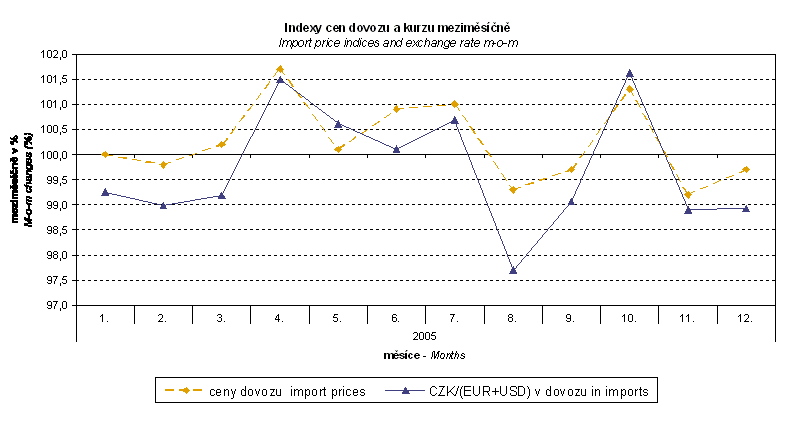
The month-on-month exchange rate index includes two most important currencies from the point of view of Czech external trade, i.e. EUR and USD; m-o-m indices of CZK exchange rates to those currencies were weighted by the weight, which pertains to those currencies in the import price index. The correlation of this total m-o-m import exchange rate index and the m-o-m index of import prices in 2005 was 0.90.
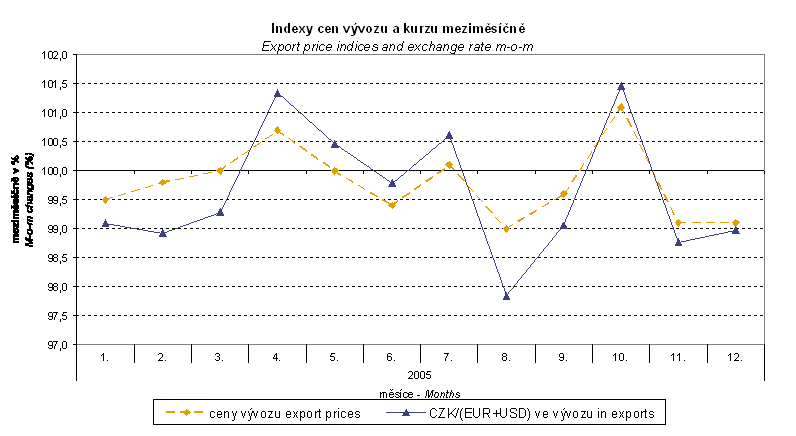
Similarly, when comparing it with m-o-m export price indices, the month-on-month exchange rate indices of EUR and USD were weighted by the weights, which pertains to those currencies in the export price index. The correlation of this total m-o-m export exchange rate index and the m-o-m export price index in 2005 was 0.89.
Thus, it shows that in the case of both import and export, external trade prices have in the m-o-m expression a strong relation to exchange rate influences. It is a rather logical conclusion, because contracts with foreign entities are usually concluded for a longer period and thus “not much happens” month-on-month in external trade prices under normal conditions provided that we eliminate exchange rate influences. The relation of m-o-m external trade price indices and the exchange rate is, moreover, gradually increasing, because in 2004 the correlations were “only” 0.83 and 0.84. Growing amounts of correlations are especially owing to an increasing share of price representatives reported in foreign currencies.
“Normal conditions” are, however, important for a close dependency. More significant differences between price and exchange rate indices were especially during the months, in which marked price changes occurred at 'mineral fuels, lubricants and related materials’ and metals.
Year-on-year evaluation:
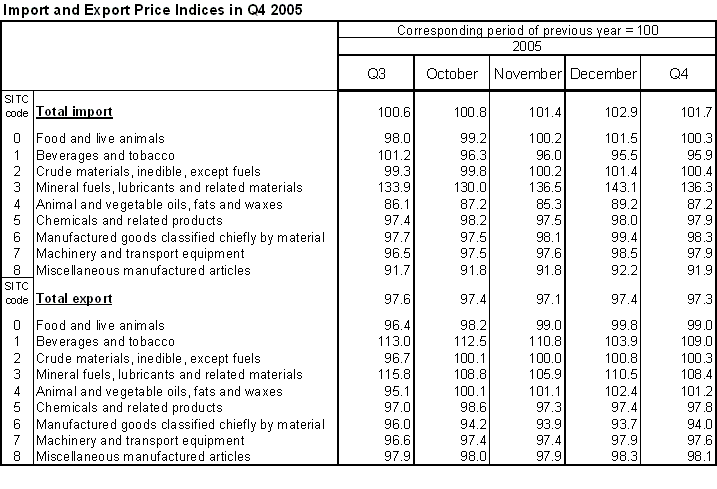
Growth of import prices was gradually increasing year-on-year during individual months of the fourth quarter from 0.8% to 1.4% up to 2.9%. In average, import prices in the Q4 increased by 1.7%, i.e. by 1.1 percentage point more than in the Q3. The main reasons for this development were gradual depreciating of CZK to USD and also acceleration of the y-o-y price growth of petroleum on world markets. Thus, the fastest growth was reported for prices of 'mineral fuels, lubricants and related materials': +36.3% (gas, petroleum, petroleum products and related materials in particular). A slight price growth was observed also for 'crude materials, inedible, except fuels' and ' food and live animals' (+0.4% and +0.3%, respectively). Prices of other groups dropped. An important price fall occurred mainly at 'miscellaneous manufactured articles': -8.1%. Prices of 'machinery and transport equipment' decreased by 2.1%.
Export prices decreased in average during the fourth quarter by 2.7%. They were dropping especially due to appreciation of CZK to EUR. The most marked fall was in prices of 'manufactured goods classified chiefly by material': -6.0% (mainly iron and steel). Also prices of 'machinery and transport equipment' were decreasing: -2.4% (especially office machines and automatic data-processing machines). A marked increase (similarly as for import prices) was observed for prices of 'mineral fuels, lubricants and related materials': +8.4% (petroleum products in particular).
Year-on-year, terms of trade reached the negative value of 95.7% in the fourth quarter of 2005 (i.e. by 1.3 percentage point less than in the Q3 of 2005 – y-o-y terms of trade were quarterly decreasing throughout the 2005 as you can see from the graph below). The lowest value was in 'mineral fuels, lubricants and related materials': 79.5% (86.6% in Q3) and 'manufactured goods classified chiefly by material' 95.6% (98.3% in Q3). Positive value of terms of trade was only at 'miscellaneous manufactured articles': 106.7%, i.e. as for more significant sections as for weight.
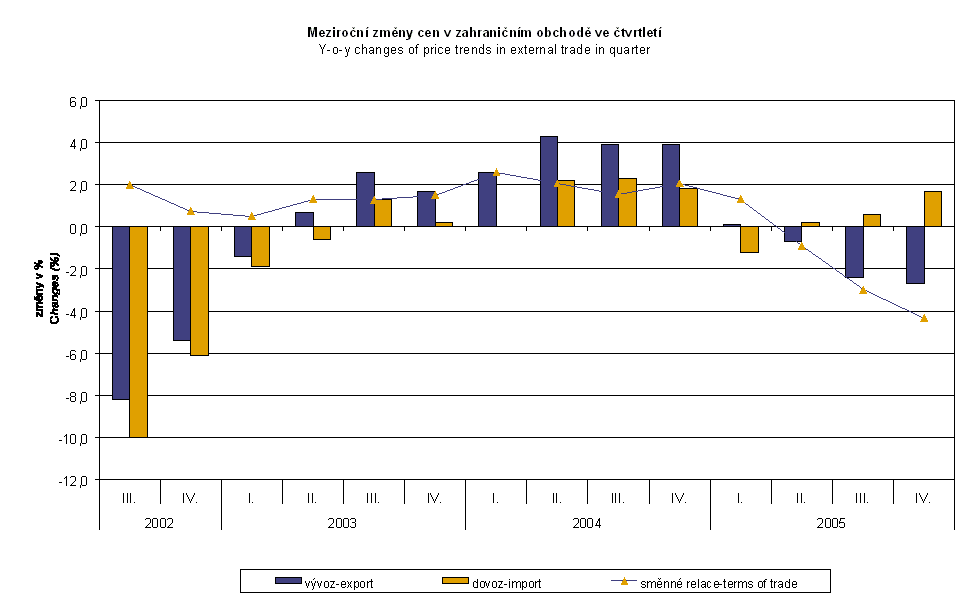
Development of external trade price indices in 2005
Import prices increased in 2005 by 0.3% in average y-o-y (+1.6% in 2004). The biggest growth occurred at 'mineral fuels, lubricants and related materials': +29.2% (gas, petroleum, petroleum products and related materials in particular). Prices of almost all of the other measured groups dropped – especially as for miscellaneous manufactured articles by 7.3%. Prices of 'machinery and transport equipment' decreased by 4.0% (mainly telecommunications and sound-recording and reproducing apparatus and equipment).
Export prices, on the contrary, decreased in average by 1.4% y-o-y in 2005 (while they were 3.7% up in 2004). Especially prices of 'mineral fuels, lubricants and related materials' were increasing (similarly as for imports) by +16.5% (petroleum products in particular) and related to that also prices of 'chemicals and related products' +1.4%. Decreasing were mainly prices of 'machinery and transport equipment' –4.0% (especially office machines and automatic data-processing machines).
What was the reason for the different price development of import and export prices? As it was shown already above, many influences have an impact on external trade prices; among others it is the CZK exchange rate to foreign currencies. That influence is significant and often even decisive, primarily in the month-on-month expression; however, it has a marked influence also on the level of y-o-y external trade price indices.
The CZSO makes experimental calculations of external trade price indices adjusted for exchange rate influence. The method used does not allow due to many practical reasons to make a 100% exchange rate adjustment (i.e. not all observed deals made in foreign currencies are for the needs of calculation of external trade price indices also reported as such – this share, however, makes only about 25%). Nevertheless, it was verified that even together with an increasing share of reporting in foreign currencies the currency basket remains basically constant. Thus, it can be stated that at the full exchange rate adjustment the differences between the published price indices and prices indices that were adjusted would be even bigger.
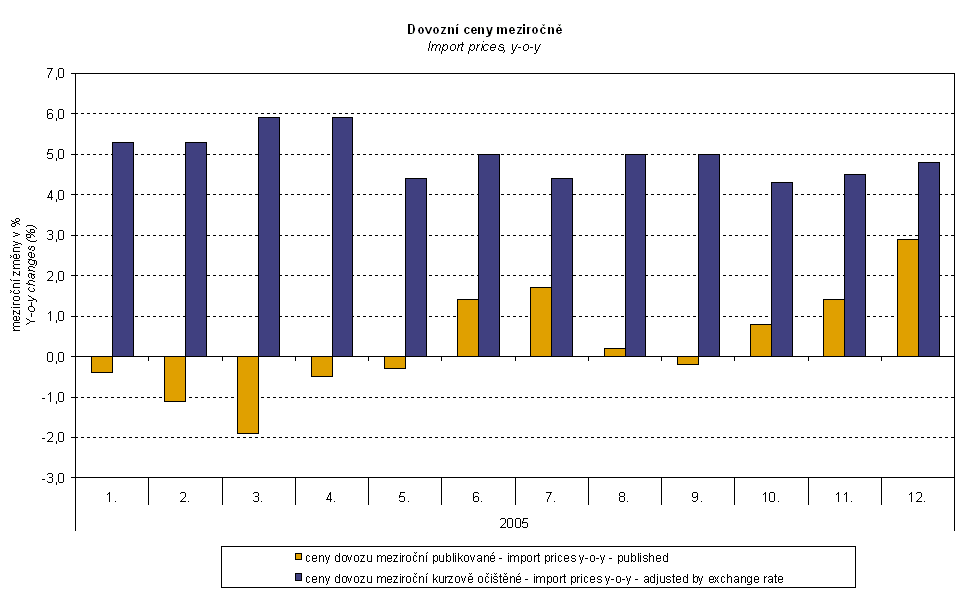
The graph shows that the exchange rate influence had an important impact on the amount of import price indices. During each month of 2005, it was decreasing the amount (CZK in total was appreciating to foreign currencies). After elimination of the exchange rate influence, import prices were increasing during all months of 2005.
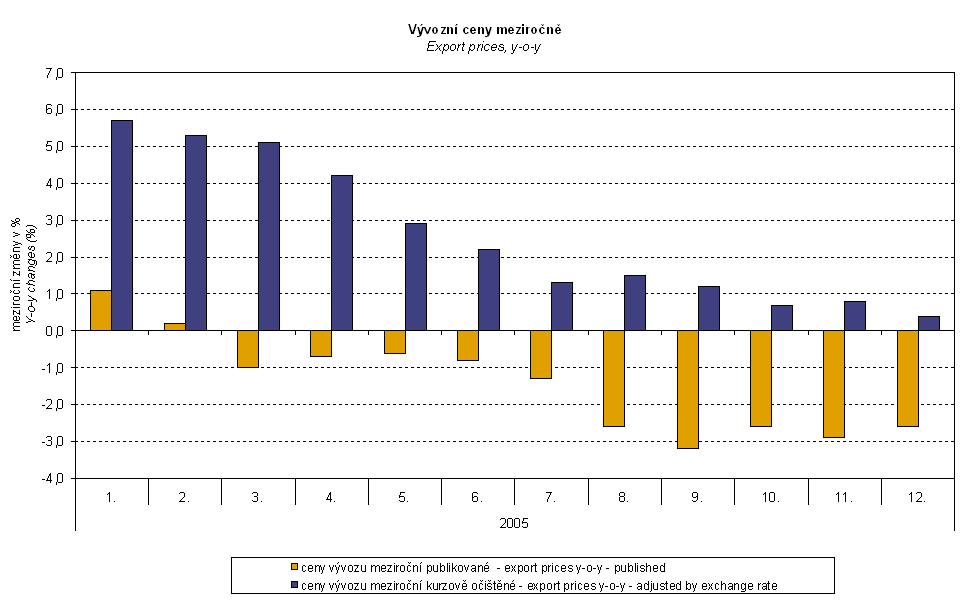
It is clear from the graph that the exchange rate had a strong influence also on the amount of export price indices. In all months of the year 2005, it was decreasing that amount. After elimination of the exchange rate influence, both prices of export as well as import would grow in each month of 2005.
Y-o-y terms of trade reached in total the negative value of 98.3% in 2005, i.e. by 3.8 percentage points less than in 2004.

The highest value of terms of trade was in 'miscellaneous manufactured articles' (105.2%) and 'chemicals and related products' (103.4%). Terms of trade of 'machinery and transport equipment' reached the value of 100.0%, i.e. by 1.7 percentage point less than in 2004. The lowest terms of trade were in 'mineral fuels, lubricants and related materials' (90.2%).
What were the reasons for a rather marked decrease in y-o-y terms of trade in 2005 and what was the development of terms of trade of individual sections during the year?
It was already shown above that external trade price indices are markedly influenced by the development of CZK exchange rate to foreign currencies, especially EUR and USD.
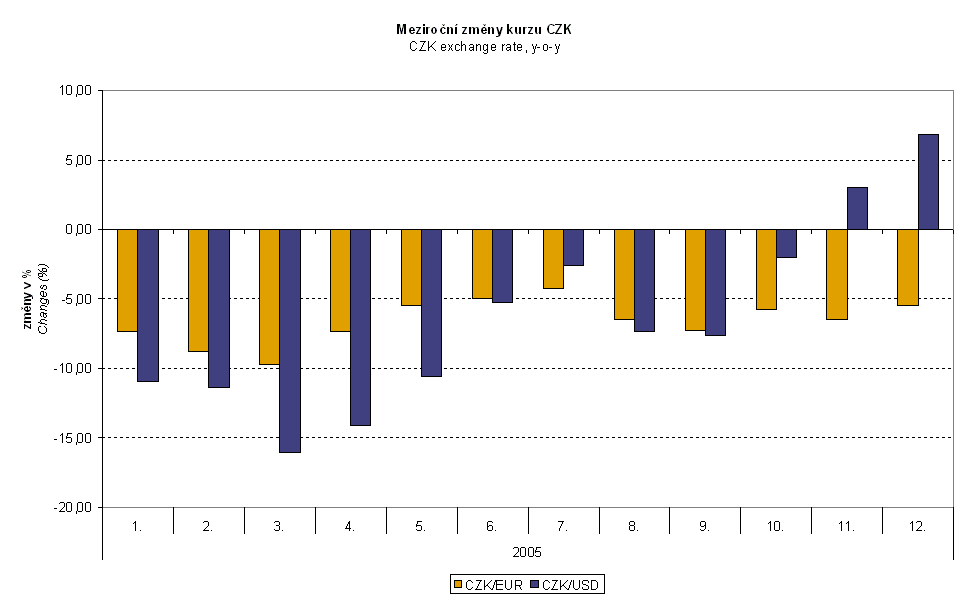
However, since the share of contracted prices in EUR is higher in exports than in imports, the development of CZK exchange rate to EUR and USD influences also the terms of trade development.
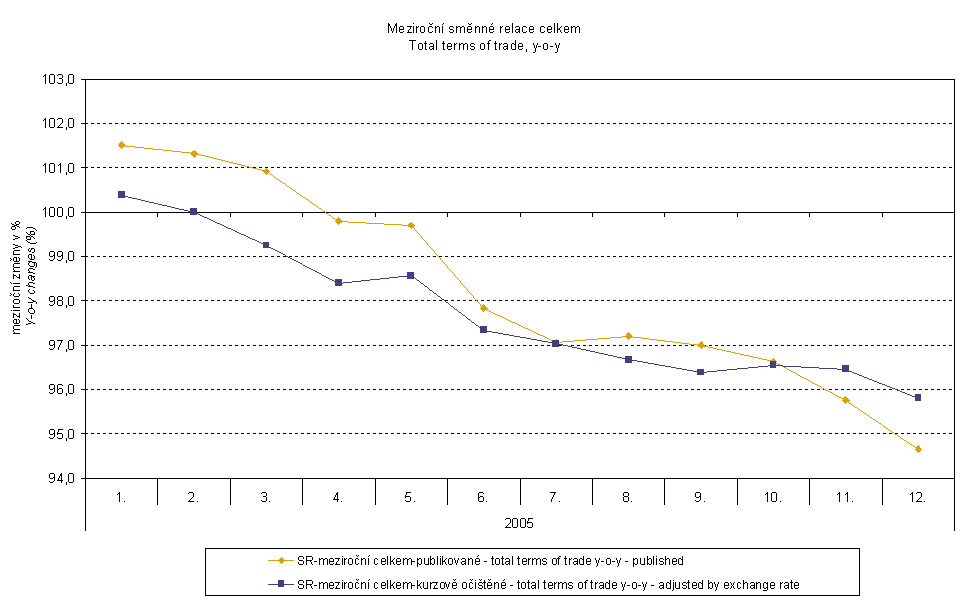
It is clear from the graph that while in the first 10 months of 2005 the exchange rate increased the y-o-y terms of trade, in November and December it was vice versa. The reason is that in the last two months, unlike from January to October, the CZK was depreciating to USD y-o-y and at the same time appreciating to EUR. Thus, the exchange rate in November and December was decreasing export prices more than import prices and thus it decreased terms of trade as well. It is clear from the graph, too, that even without the exchange rate influence the terms of trade development was degressive; however, this influence was making the fall even deeper.
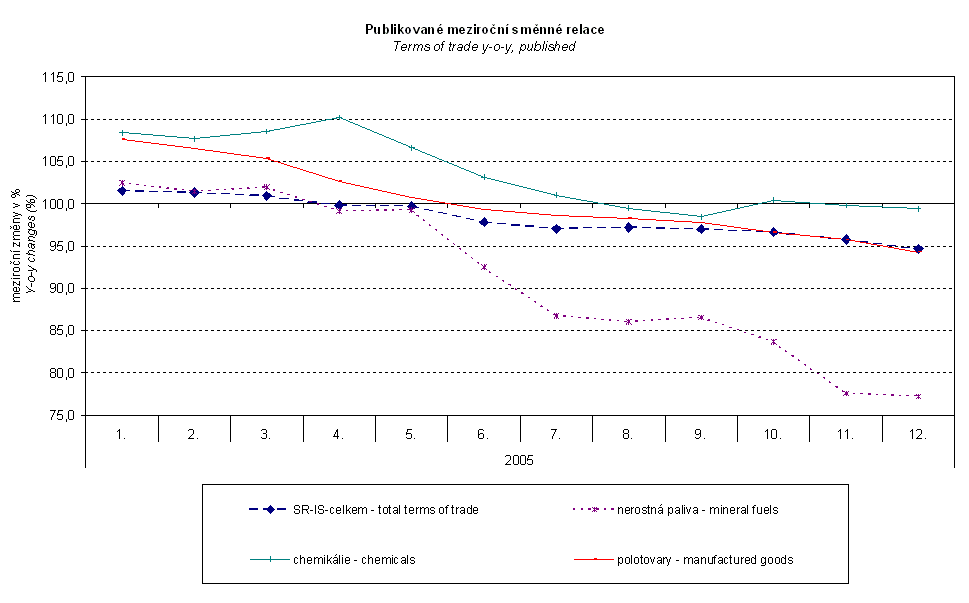
What are other reasons for the gradual decrease in y-o-y terms of trade during the year 2005? The above-mentioned graph shows sections with the most marked decrease in terms of trade in 2005. They are 'manufactured goods classified chiefly by material' (metals and manufactures of metals in particular) and, most of all, 'mineral fuels, lubricants and related materials' and also chemicals related to them (especially organic chemicals); i.e. groups, in which the most marked price turbulences occurred in 2005. Thus, it seems that besides exchange rate influences the main reason for the terms of trade decrease was insufficient capability to reflect import price pressures in export prices.
Elaborated by: Jiří Choun, Prices Statistics Department
Director: Jiří Mrázek, phone number (+420) 27405 2533