
Development of external trade price indices - 3. quarter of 2008
Product Code: e-7232-08
Quarter-on-quarter comparison:
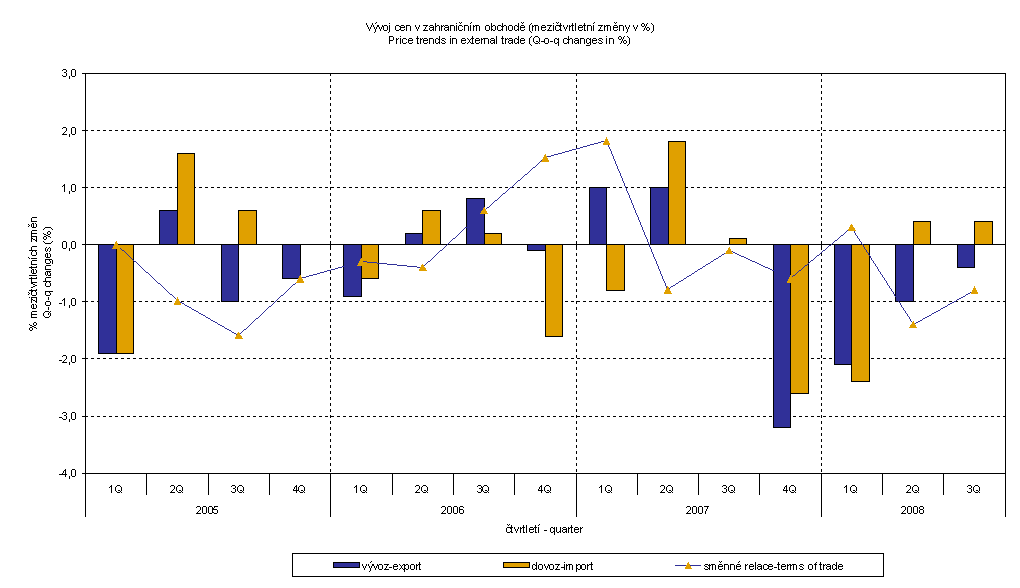
Export prices Q3 2008 compared to Q2 2008 decreased by 0.4% (in Q2 2008 by 1.0%). Import prices increased by 0.4 % (in Q2 also by 0.4%).
In export prices the most marked decrease (-6.2%) was recorded in 'food, beverages and tobacco' (especially cereals and cereal preparations), 'crude materials, inedible, except fuels' by 5.1% (especially metal scrap). Among groups most important in terms of weight prices fell also in 'miscellaneous manufactured articles' 1.7% and in 'machinery and transport equipment' by 1.6% (mainly telecommunications and sound-recording and reproducing apparatus). In contrast, increasing were prices of 'chemicals and chemical products' by 3.0% (especially inorganic chemicals) and 'mineral fuels, lubricants and related materials' by 2.5%.
In import prices the most marked increase was recorded in 'crude materials, inedible, except fuels' by 9.0% (especially metaliferrous ores) and 'mineral fuels, lubricants and related materials' by 7.9%. Among groups most important in terms of weight the biggest price drop was recorded, like in exports, in 'machinery and transport equipment' by 1.6% and in 'food, beverages and tobacco' by 1.3% Prices of 'manufactured goods classified chiefly by material' and in 'miscellaneous manufactured articles' dropped both by 0.8%.
External trade price development was again widely affected by the CZK exchange rates to the leading foreign currencies.
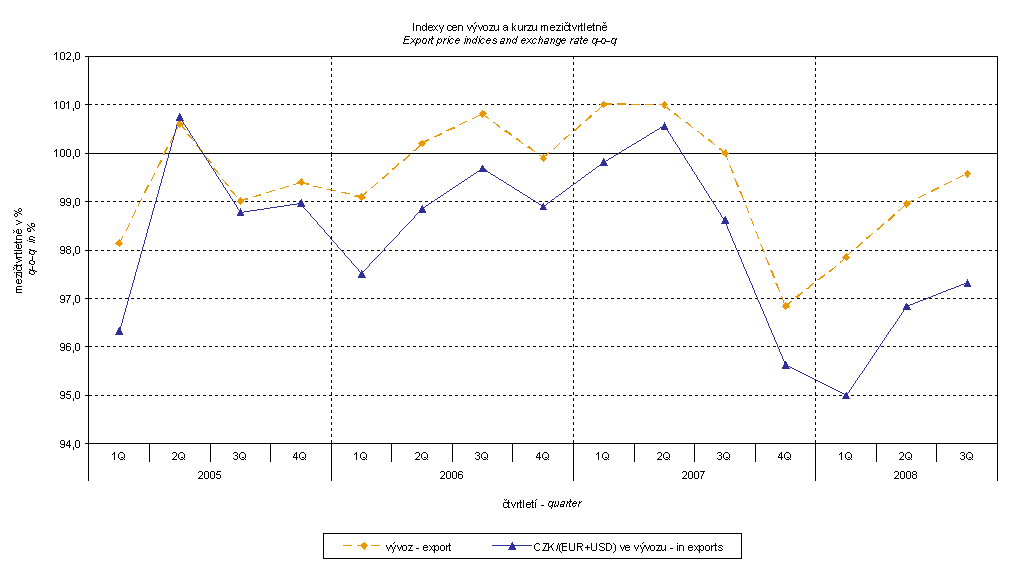
The q-o-q exchange rate index includes two most important currencies from the aspect of the Czech external trade, i.e. EUR and USD; q-o-q indices of CZK exchange rates to these currencies were weighted by the weight which pertains to those currencies in the export price index.
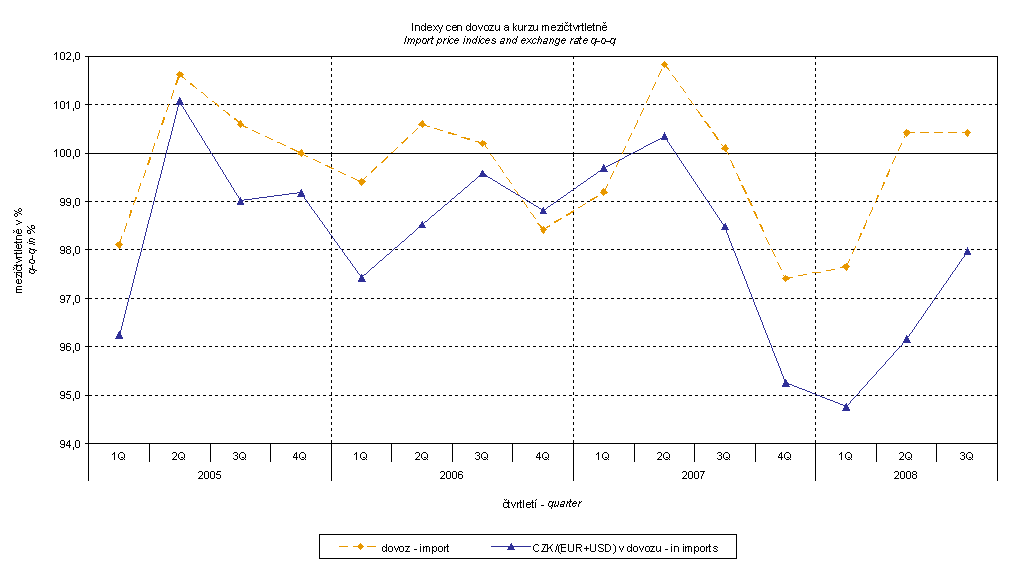
Similarly, when comparing with the q-o-q import price indices, q-o-q EUR and USD exchange rate indices were weighted by the weight which pertains to these currencies in the import price index.
Thus, it becomes clear that in both the import and export, the external trade prices have a strong relation to exchange rate impacts. This relation could naturally be even stronger in m-o-m comparison, however, also for the q-o-q index it is relatively strong as shown in graphs. It is rather logical conclusion because the contracts with foreign entities are, as a rule, signed for a longer period of time and the longer is the contract period, the stronger is the relation to exchange rates.
The graphs clearly show that slower growth rate of strengthening of CZK to EUR and moderate weakening of USD in Q3 2008 resulted in more moderate drop of export price indices and even a slight rise of the import price index.
In Q3 2008, the value of terms of trade compared with Q2 2008 was 99.2 % (in Q2 2008 it was 98.6 %). The lowest value was reached in 'crude materials, inedible, except fuels' 87.1%. In groups important in terms of weight negative values of terms of trade were recorded in mineral fuels, lubricants and related materials' 95.0% and 'miscellaneous manufactured articles' 99.1%. Positive terms of trade values were recorded only in 'manufactured goods classified chiefly by material' 103.0% and 'chemicals and chemical products' 102.0%. 'Machinery and transport equipment' reached 100.0%.
Year-on-year comparison:
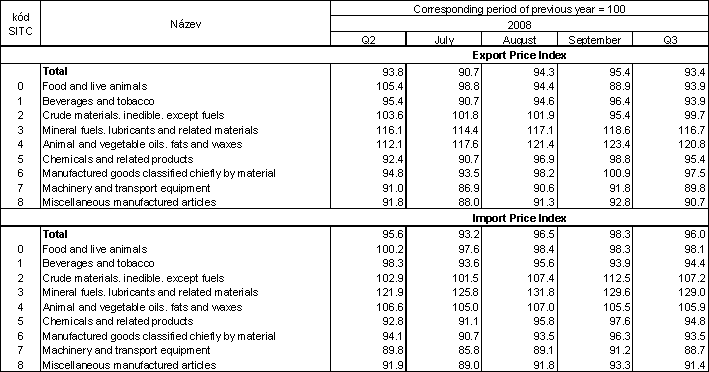
In Q3 2008 export prices dropped by 6.6 % (in Q2 2008 by 6.2%). The prices thereby even deepened their drop reported for Q4 2007. Significant decrease was due mainly to continuing strong appreciation of CZK to EUR and USD. The biggest drop was recorded for prices in 'machinery and transport equipment' by 10.2% (especially telecommunications and sound-recording and reproducing apparatus), 'miscellaneous manufactured articles' by 9.3%, 'chemicals and related products' by 4.6% and 'manufactured goods classified chiefly by material' by 2.5%. Among groups important in terms of weight increasing prices were recorded only in 'mineral fuels, lubricants and related materials' by 16.7% (particularly coal).
Import prices decreased in Q3 2008 by 4.0 % (in Q2 2008 by 4.4 %). The price drop was attributed especially also to a strong CZK exchange rate. The biggest price drops were recorded in 'machinery and transport equipment' by 11.3% (mainly office equipment and automatic data-processing machines), 'miscellaneous manufactured articles' by 8.6%, 'manufactured goods classified chiefly by material' by 6.5%. 'chemicals and related products' by 5.2%. Among groups important in terms of weight increasing prices were recorded only in 'mineral fuels, lubricants and related materials' by 29.0% (mainly coal) and in 'crude materials, inedible, except fuels' by 7.2%.
Terms of trade reached in Q3 2008 y-o-y the value of 97.3 % (i.e. by 0.8 p.p. less than in Q2 2008) and in Q3 they remained in negative values – see graph below. The lowest value was recorded in 'mineral fuels, lubricants and related materials', 90.5 %. Among groups important in terms of weight negative terms of trade values ware recorded in 'crude materials, inedible, except fuels' 93.0%, 'food, beverages and tobacco' 95.7% and 'miscellaneous manufactured articles' 99.2%. In contrast, positive terms of trade values were recorded for 'manufactured goods classified chiefly by material'' 104.3%, 'machinery and transport equipment' 101.2% and 'chemicals and related products' 100.6%.
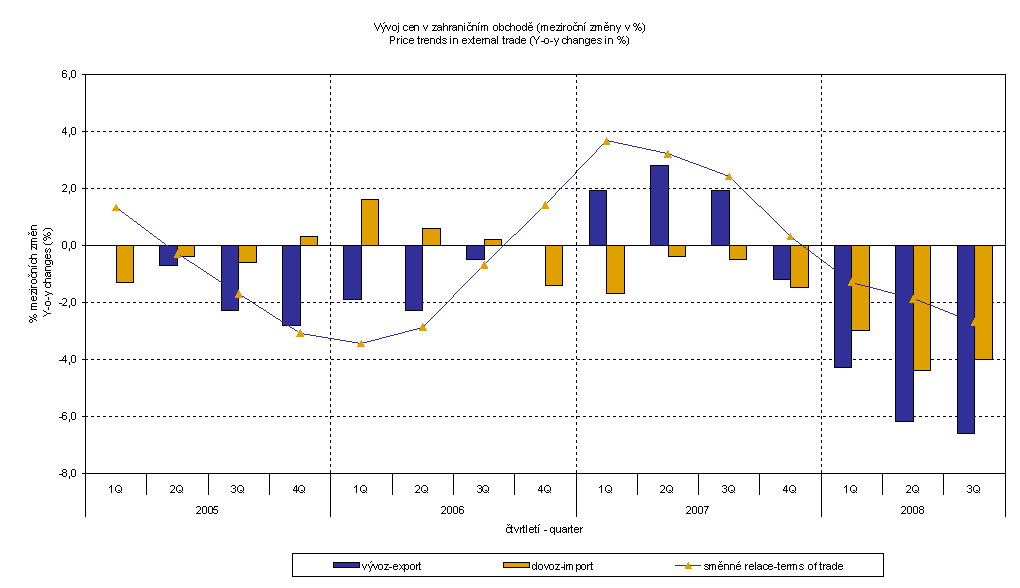
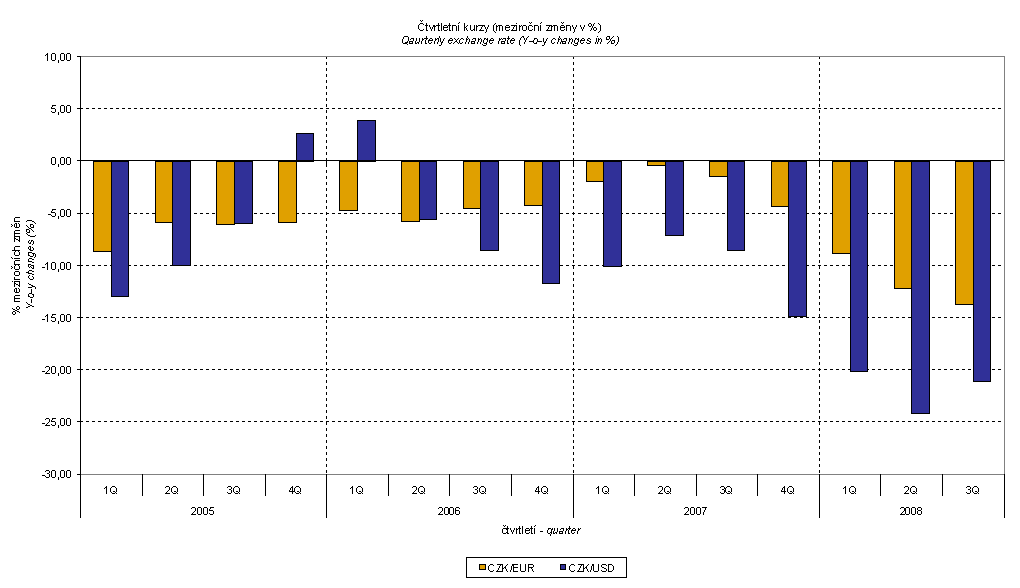
Beginning from Q4 2007 different price development was balanced again. As it was shown above, external trade prices are exposed to many effects, among other things, also to the CZK exchange rate to foreign currencies. This influence is important and often even decisive mainly in m-o-m expression; however, it is very significant in q-o-q comparison and markedly affects also the level of the year-on-year external trade price indices. In the last as well as in this quarter the CZK exchange rate recorded an exceptional growth, which corresponds with low values of external trade price indices. The development of quarterly y-o-y changes of exchange rates is clear from the graph below.
Year-on-year external trade price indices adjusted by exchange rate
The CZSO makes experimental calculations of monthly external trade price indices adjusted for exchange rate influence. The method used does not allow due to many practical reasons to make a 100% exchange rate adjustment (i.e. not all observed deals made in foreign currencies are for the needs of calculations of external trade price indices also reported as such – this share, however, makes only about 30 %). Nevertheless, it was verified that despite the increasing share of reporting in foreign currencies the currency basket remains basically constant. Thus, it can be stated that at the full exchange rate adjustment the differences between the published price indices and price indices that were adjusted would be even bigger.
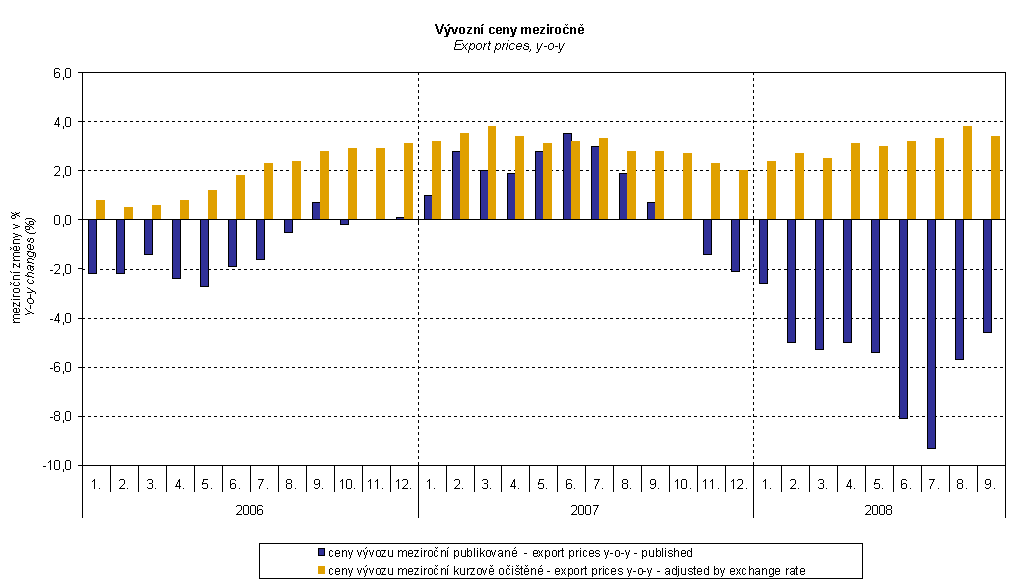
It is clear from the graph that the exchange rate was important also for export price indices. For the whole observed period except for June 2007 it decreased their amount (CZK was mostly strengthening to foreign currencies). In June 2007 the exchange rate increased the index due to weakening of CZK to EUR. After elimination of the exchange rate influence, export prices would have been increasing in all months in the period 2006 to 2008. In 2008 and especially in the last month it is obvious how the strong exchange rate impacted the export price decrease.
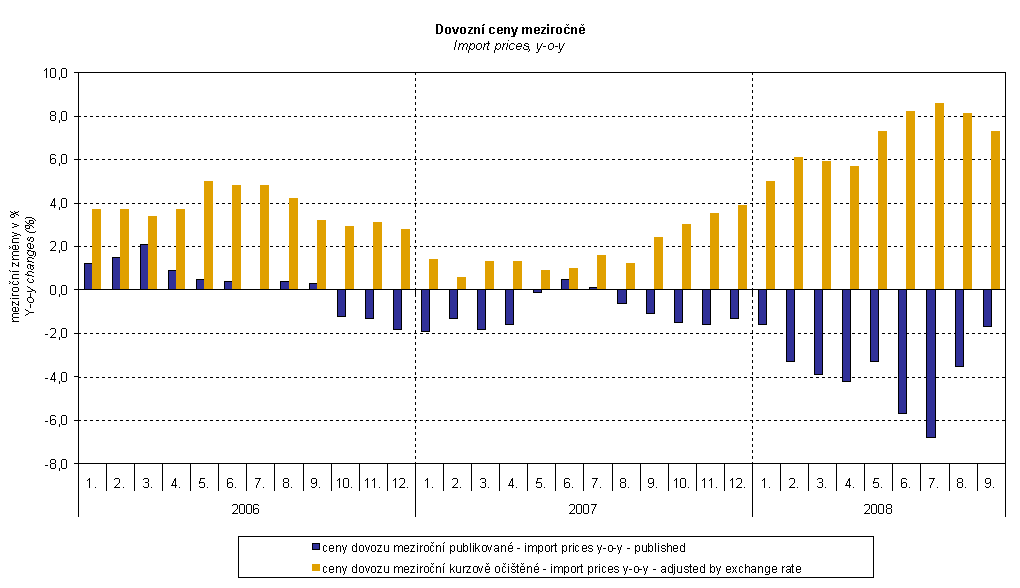
It is clear from the graph that the exchange rate was important also for import price indices. For the whole observed period it decreased their amount. After elimination of the exchange rate influence, import prices like export prices would have been increasing in all months of the period 2006 to 2008. Like in exports, it is obvious how the strong exchange rate in June and July 2008 impacted the import price decrease.
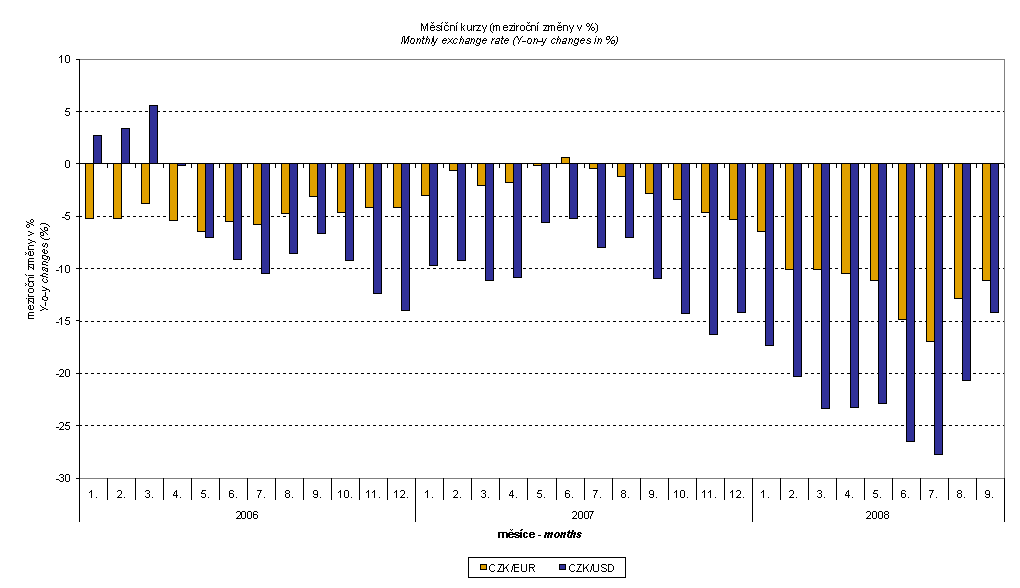
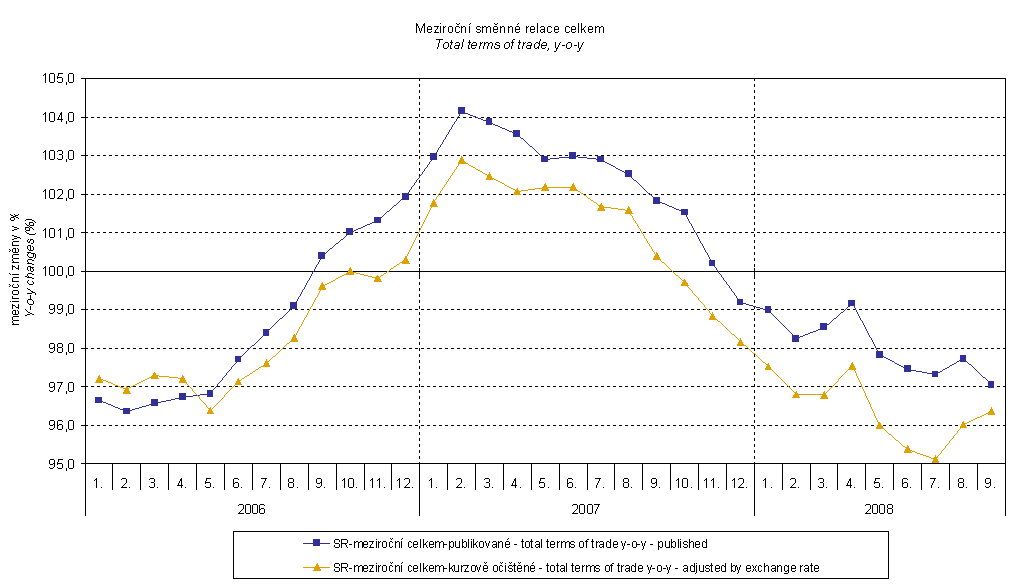
It is clear from the above graph that in the period from January 2006 to April 2006 the exchange rate influence decreased y-o-y terms of trade and from May 2006 the exchange rate influence increased terms of trade. This came from the fact that in currency basket the share of USD is bigger in imports than in exports. As it is clear from the graph Monthly Exchange Rates, in the period from January to April 2006 CZK strengthened to EUR and, at the same time, mostly weakened to USD. The graph also shows that even after the exchange rate influence elimination terms of trade would have been growing gradually from May 2006 to February 2007, however, this influence further intensified the growth of the exchange rate. From February 2007 with a little exception in June 2007 terms of trade were decreasing continuously until December 2007 when for the first time after sixteen months they reached negative values. In March and April 2008 terms of trade began to grow, however, from May they began to fall lower into negative values. In August 2008 the terms of trade slightly increased but in September they dropped again due to the exchange rate.
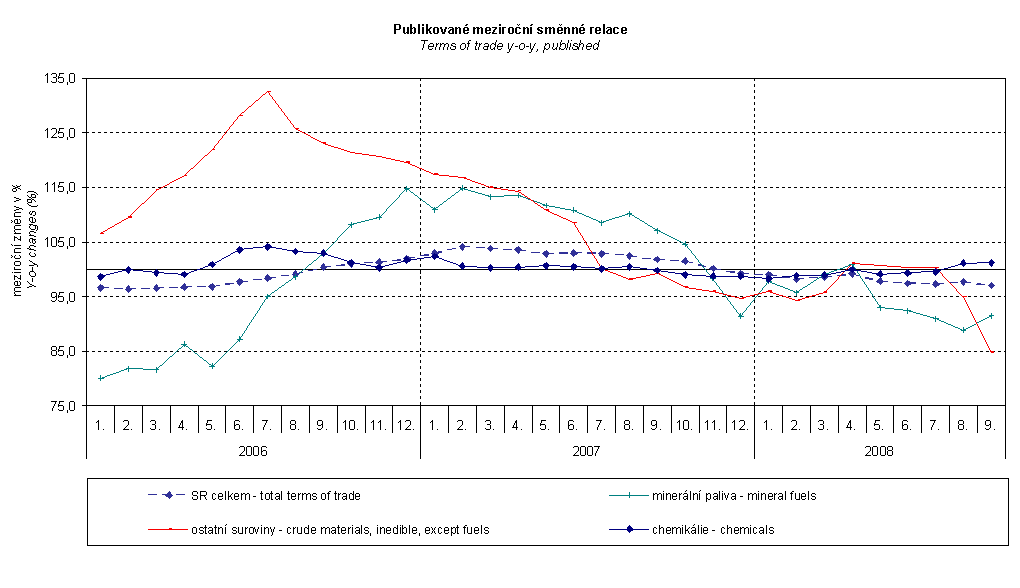
What are the other reasons of gradual drop of the y-o-y terms of trade? The above graph presents groups showing more marked downward trend of terms of trade since 2007. This refers to 'miscellaneous manufactured articles' (mainly metaliferrous ores and metal scrap) where import prices grew faster than export prices but mainly to 'mineral fuels, lubricants and related chemicals (especially plastics). The growth of terms of trade after the exchange rate influence elimination in the previous graph recorded in August and September 2008 can be attributed to the terms of trade increase in chemicals and chemical products (in August) and 'mineral fuels, lubricants and related materials' (in September). How would the terms of trade value develop if the survey did not include 'mineral fuels, lubricants and related materials'?
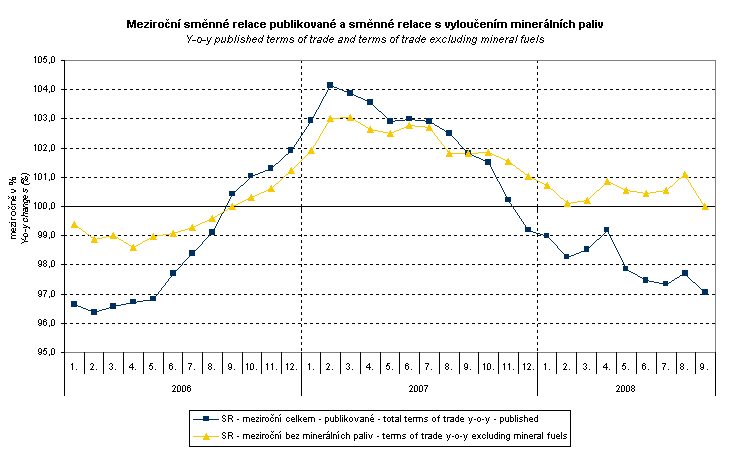
As it is clear from the graph 'mineral fuels, lubricants and related materials' decreased the total value of y-o-y terms of trade in the period from January to August 2006, from September 2006 to September 2007 they increased the terms of trade value and from October 2007 to September 2008 'mineral fuels, lubricants and related materials' again contributed to the terms of trade decrease. It is naturally linked to the price development in the world markets, especially prices of crude petroleum. Import prices which compared to export prices show bigger share of crude materials respond more sensibly to price turbulences and as the prices of crude materials grow, terms of trade, as a rule, drop and, conversely, as the prices of crude material drop terms of trade grow.
Final table shows published not adjusted external trade price indices.
Prepared by: Hana Lapáčková, Price Statistics Department
Director: Jiří Mrázek, phone (+420) 274 052 533