Development of consumer price indices - 1. quarter of 2006
Product Code: e-7132-06
Development of consumer price indices in the first quarter of 2006
Development of consumer prices in the first quarter of 2006 was characteristic (similarly as in the previous years) for its marked month-on-month growth of prices in January followed by calming down of the price level in February and March. In January 2006, consumer prices increased by +1.4%, which is by 0.7 percentage point more than in January 2005. This development was caused to great extent by administratively regulated prices (0.9 percentage point); share of market prices was 0.5 percentage point. As for regulated prices, increasing were especially prices of electricity (+9.0%), natural gas (+4.8%), heat and hot water (+6.3%), water rate (+3.4%) and sewage collection charges (+5.0%). As for market prices, what increased most were prices in ‘food and non-alcoholic beverages’, ‘recreation and culture‘, and ‘restaurants and hotels‘. The average month-on-month growth rate in the first quarter of 2006 was 0.5%.
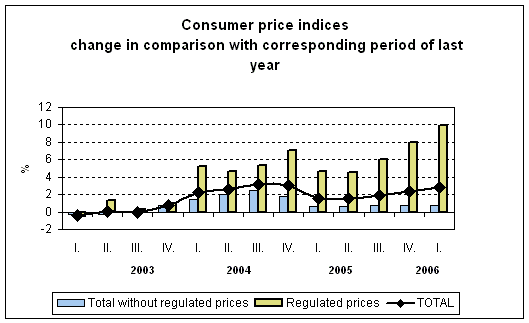
In relation to the different m-o-m increase of consumer prices in January 2006 and January 2005, the year-on-year growth of consumer prices accelerated to +2.9% in January 2006 (from +2.2% in December 2005); it influenced the price level of the entire first quarter, too. Consumer prices increased in Q1 2006 in comparison to Q1 2005 by +2.8%, which is by 0.4 percentage point more than in the Q4 2005. This development was influenced mainly by regulated prices, which grew by +9.9% (from +8.0% in Q4 2005), while market prices increased the same as in the fourth quarter by +0.7%.
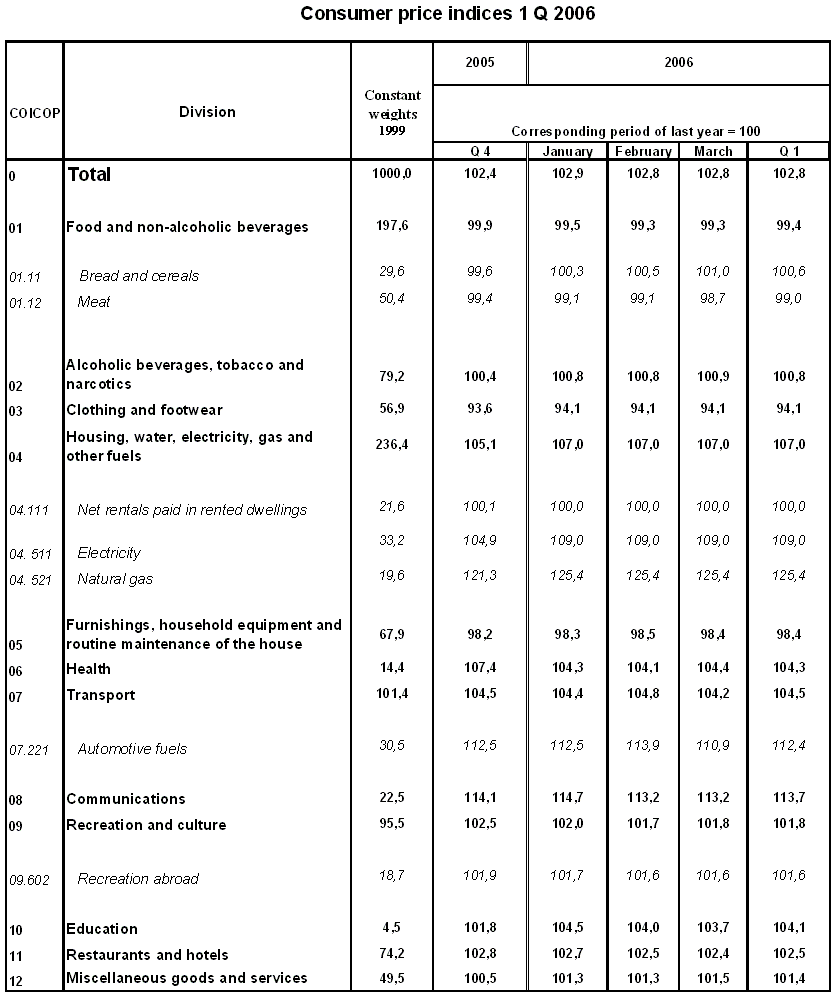
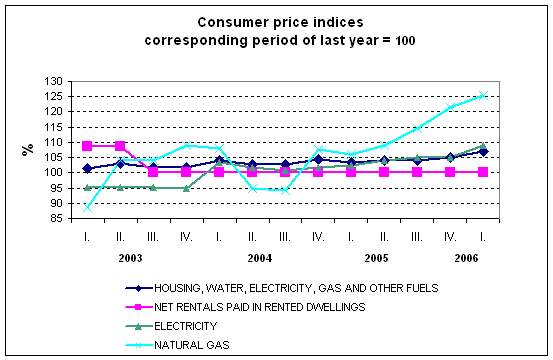
The y-o-y price growth acceleration was influenced mainly by prices in ‘housing, water, electricity, gas and other fuels‘, which recorded for some items such growth that has not been observed for several years. Prices of natural gas were higher by +25.4% y-o-y in the Q1 2006, which is the most since the fourth quarter of 2001. Prices of electricity grew by +9.0%, i.e. the most since the Q4 2002 and prices of heat and hot water grew by +10.8%, which is the biggest growth since the Q4 1998. The ‘housing, water, electricity, gas and other fuels‘ COICOP division had by far the biggest influence on the y-o-y increase of consumer prices (+1.9 percentage point).
The second as for its influence on the price level growth (0.4 percentage point) was ‘transport‘; it was due to higher prices of automotive fuel by +12.4%. This increase was caused by a marked price increase of automotive fuel during the year 2005, while in the first quarter of 2006 their prices were slightly decreasing in average, probably as a reflection of a slowdown of the price growth of world prices of crude oil, import prices of ‘mineral fuels, lubricants and related materials ‘ as well as prices of industrial producers of refined petroleum products in the end of the year 2005. Prices of transport services grew by +4.7%.
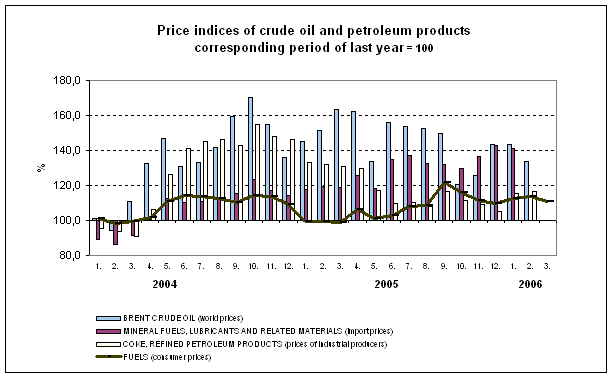
‘Communications‘ had the third biggest influence (0.3 percentage point) on the price level. The year-on-year growth there in the first quarter of 2006 was also the result of the price development in 2005. Public telecommunication services grew by +14.9% as a result of a change in lump sum fees for operation of a residential telephone line from July 2005. In the first quarter, however, the fee for installation of a residential telephone line decreased and free minutes were added for local and distance calls, which decelerated the price growth of public telecommunication services. Also for postal services the price growth slowed down to +4.7% (from +15.5% in the Q4 2005). The reason was a one-shot increase of prices for postal fees in February 2005.
In the first quarter of 2006, price level grew also thanks to increasing prices in ‘recreation and culture‘, ‘restaurants and hotels‘ (both +0.2 percentage point) as well as in ‘alcoholic beverages, tobacco‘, ‘health‘ and ‘miscellaneous goods and services‘ (all +0.1 percentage point). Of them, price growth acceleration was recorded for prices in ‘miscellaneous goods and services‘ and ‘alcoholic beverages, tobacco‘. In the former, the reason was mainly higher prices in personal services and financial services. As for the latter, prices grew by +1.3% as a result of an increase in the excise tax since July 2005.
On the other hand, decreasing of the price level (-0.3 percentage point) was influenced by prices in ‘clothing and footwear‘, ‘furnishings, household equipment‘ (-0.1 percentage point), ‘food and non-alcoholic beverages‘ (-0.1 percentage point). This development is (as for the first two segments of the consumer basket mentioned above) caused by a long-term slight decrease of prices. Dropping of prices in ‘clothing and footwear‘, ‘household appliances‘ as well as in ‘equipment for the reception, recording and reproduction of sound and pictures‘ reflects competition pressures on the market with those products, which were caused by offer prevailing over the demand as well as by import of cheap goods from Asian countries. The situation is similar also as for prices of food: imported goods and policy of business chains are influencing favourable development of food prices.
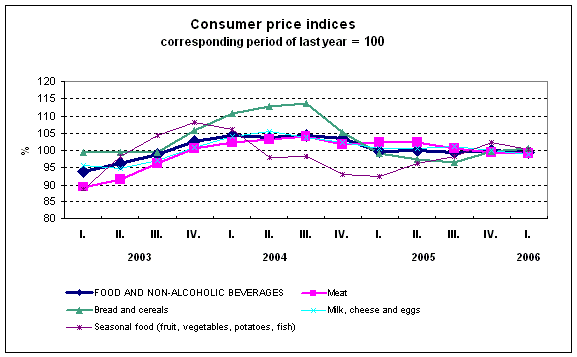
In every month of the Q1 2006, prices of ‘food and non-alcoholic beverages‘ were lower than in the corresponding period of the year 2005 and their drop was even bigger when compared to the Q4 2005. Lower by more than 5% were prices of flour, pork, butter, fruit of temperate climatic zone and sugar. On the contrary, higher than 3% were prices of baked goods, beef, dry fruit, and fresh vegetables. Prices of potatoes grew by +29.6%. Development of food prices was influenced also by the impact of markedly low farm-gate prices of agricultural producers, namely vegetable products in the year 2005.
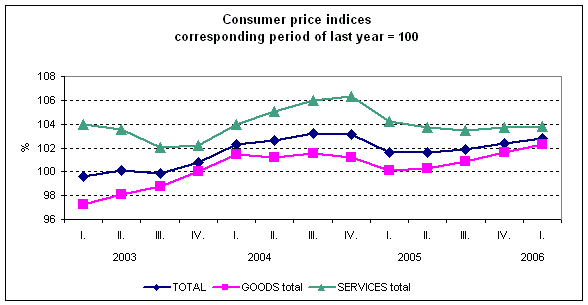
Price growth of goods in total accelerated to +2.3% (from +1.6% in Q4) and price growth of services to +3.8% (from 3.7% in Q4).
Harmonized index of consumer prices in the EU 25
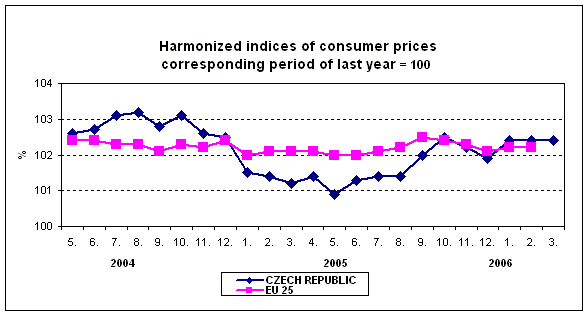
The year-on-year increment of the average harmonized index of consumer prices (HICP) in the EU 25 was +2.2% both in January and February, which is by 0.1 percentage point more than in December 2005 (the data are preliminary). The biggest growth was recorded in Latvia (+7.6% and +7.0%), while the lowest was in Poland (+0.9% in both months). In Slovakia, price growth accelerated in January and February to +4.1 and +4.3%, respectively (from +3.9% in December). In Germany, price growth stood at +2.1% from December 2005 to February 2006. In the Czech Republic, the y-o-y HICP increment increased to +2.4% in January (from +1.9% in December) and remained on that level also in February and March.
From January to September 2005, HICP figures for the Czech Republic were under the EU average; from October to December they were almost the same. In January 2006, in accordance with the national index of consumer prices in the CR, the price level markedly increased and the Czech HICP got above the level of the HICPEU25 .